
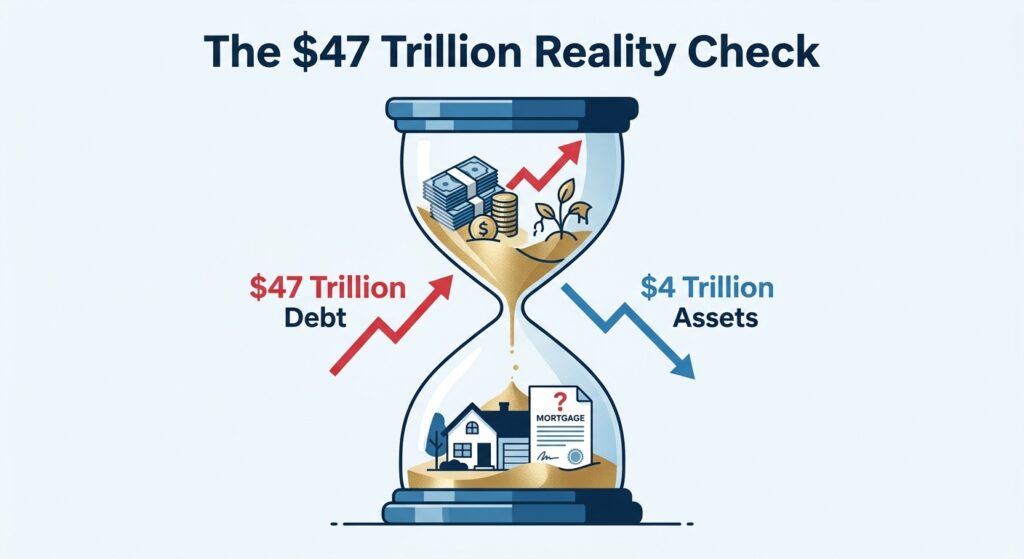
The $47 Trillion Reality Check: What Treasury’s Insolvency Report Means for Your Mortgage Business
Last week’s Treasury report dropped a bombshell that most Americans missed: the U.S. is technically insolvent with $47 trillion in debt against just $4 trillion in assets.
As mortgage professionals, we need to understand what this means for our industry and clients.
First, let’s be clear about what insolvency means here. This isn’t about immediate collapse or panic selling. It’s about long-term fiscal sustainability and the government’s ability to meet its obligations without fundamentally restructuring how it operates. For the mortgage market, this creates three immediate realities:
* Interest rate volatility will become the new normal. The Federal Reserve will face increasing pressure to keep rates artificially low to service this massive debt load. But inflation concerns will push rates higher. This creates a whipsaw effect that makes timing crucial for your clients.
* The dollar’s strength is now questionable long-term. While it remains the world’s reserve currency today, countries are actively seeking alternatives. A weaker dollar means higher costs for everything, including construction materials and home prices.
Government backing of mortgages through Fannie Mae and Freddie Mac faces uncertainty. These agencies hold trillions in mortgage debt, and their government guarantee becomes less meaningful when the guarantor itself is insolvent. Here’s what this means for your business strategy:
* Educate clients on fixed-rate mortgages now. Variable rates will likely see extreme swings as monetary policy becomes increasingly erratic. Locking in current rates, even if they seem high, may look brilliant in two years.
* Position yourself as the expert who understands macroeconomics. Most loan officers focus on rates and terms. You need to explain how fiscal policy impacts their personal wealth and home values.
* Diversify your referral sources beyond traditional real estate agents. Economic uncertainty creates opportunities in distressed properties, investor sales, and refinancing as people try to extract equity before potential currency devaluation.
The clients who understand these dynamics will be your most valuable relationships. They’ll refer others who think strategically about their finances rather than just chasing the lowest payment. This isn’t about fear-mongering. It’s about positioning yourself ahead of a fundamental shift in how America finances itself. The professionals who adapt now will thrive while others scramble to understand what happened. What strategies are you implementing to help clients navigate this new reality?