UWM Just Called Two Harbors’ Bluff — And This $1.3B Poker Game Is Getting Absolutely Wild
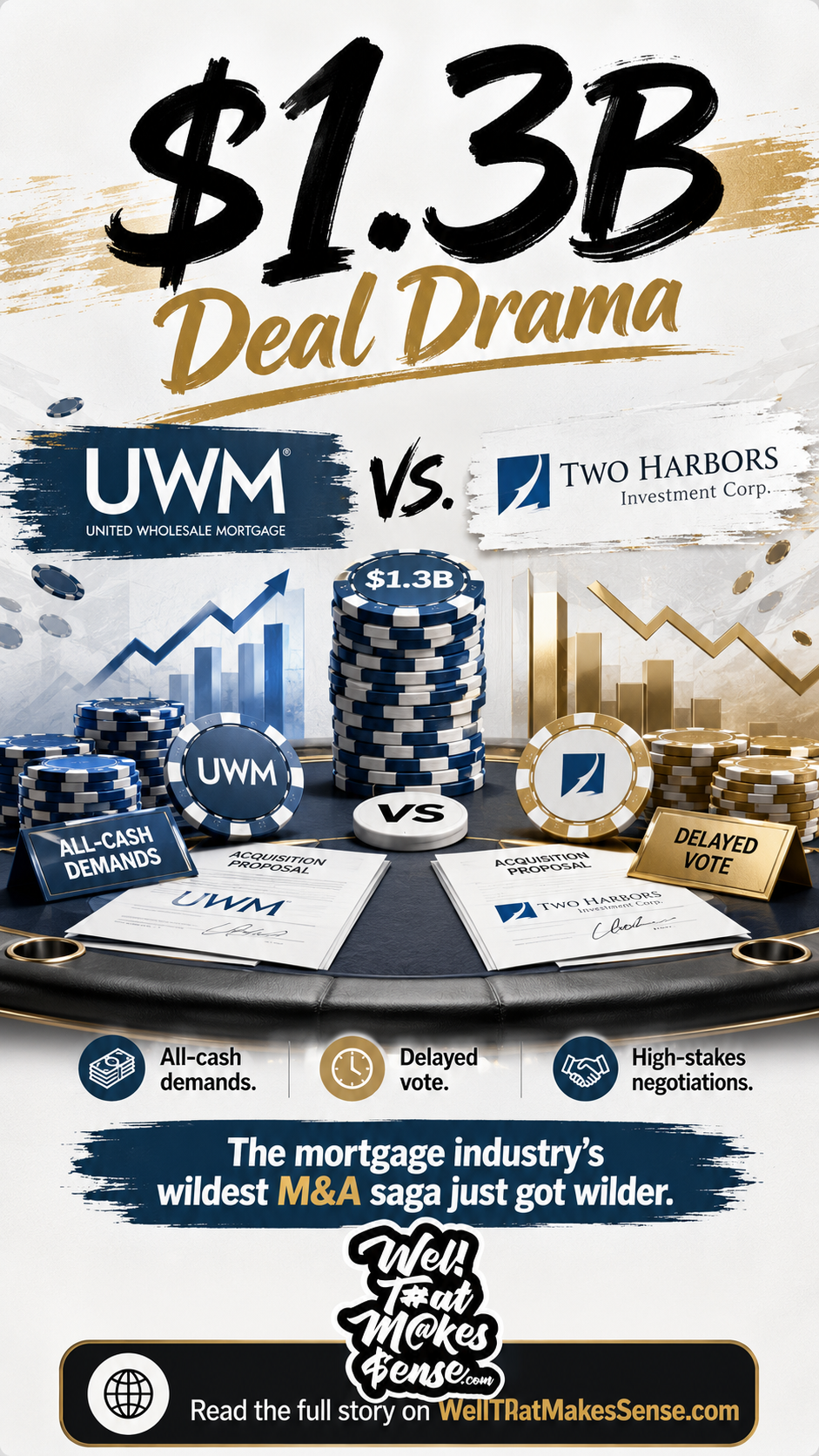
Shareholder vote delayed AGAIN as Two Harbors demands all-cash terms and UWM says “let’s talk.” Spoiler: Nobody’s blinking yet.
Remember when you thought your last deal was complicated? Try negotiating a $1.3 billion acquisition while your target company keeps moving the goalposts, delaying shareholder votes, and publicly demanding you restructure the entire deal. Welcome to June 2026, where the UWM-Two Harbors saga has officially entered its “hold my beer” phase.
If you’ve been following this mortgage industry soap opera (and honestly, how could you not?), you know we’ve already covered how Cross Country Mortgage executives allegedly torched $100 million in value right before their sale to UWM, and how this whole mess turned into a corporate brawl that makes your average rate sheet war look like a kindergarten disagreement.
But here’s where things get really interesting: Two Harbors just delayed its shareholder vote for the second time — now pushed to June 23 — and publicly told UWM to come back with a fully financed, all-cash offer at the same $12.50 per share price. Oh, and they want assurances that UWM’s stock won’t default during the transition period. You know, just casual billion-dollar demands.
The “Show Me The Money” Moment
Two Harbors isn’t playing games anymore. In their latest move, they’ve essentially said to UWM: “We love your offer, but we’d love it more if it came with actual cash instead of your stock.” This is the corporate equivalent of your borrower saying “I’ll take that rate… if you can also throw in zero closing costs, a free appraisal, and a pony.”
The concern isn’t completely unfounded. The original deal was all-stock, meaning Two Harbors shareholders would receive UWM shares valued at $12.50 per share. But what happens if UWM’s stock takes a nosedive between now and closing? Two Harbors wants protection against that scenario — specifically, they want cold, hard cash that doesn’t fluctuate with market sentiment or Mat Ishbia’s latest Twitter proclamation.
Here’s the kicker: Two Harbors isn’t just asking for cash. They’re demanding a fully financed cash offer with no stock price contingencies. Translation: “UWM, prove you can actually write a check this big without needing to sell stock, take on risky debt, or raid the office vending machines.”
UWM’s Response: “Let’s Talk” (But Also “We’re Right”)
To UWM’s credit, they didn’t storm off in a huff. Instead, they’ve signaled openness to “enhancing” their offer while simultaneously reaffirming that their original $12.50-per-share bid is totally fair and everyone should just calm down already.
Reading between the lines of UWM’s public statements, their position seems to be: “Look, we’ll negotiate, but we’re not desperate here. Our offer was generous. If Two Harbors wants to unlock additional value, great — let’s have that conversation. But we’re not getting played.”
It’s a delicate dance. UWM wants Two Harbors, but they also can’t afford to look weak or overpay in a market where every competitor is watching. Meanwhile, Two Harbors needs this deal to close, but not at the expense of their shareholders getting steamrolled if UWM’s stock tanks.
The result? Another delayed vote, more public posturing, and mortgage brokers everywhere wondering if their favorite wholesale lender is about to get significantly bigger or spectacularly embarrassed.
What This Means for You (Yes, You)
If you’re an LO reading this and thinking “cool story, but what does this have to do with my pipeline?” — fair question. Here’s why you should care:
First, if this deal closes (big if at this point), UWM instantly becomes an even more dominant force in wholesale lending. That could mean better rates, more aggressive programs, or just Mat Ishbia with an even bigger megaphone. Your rate sheets could look different by Q3.
Second, this is a masterclass in M&A dysfunction. If you’ve ever wondered what happens when corporate egos, shareholder interests, and billion-dollar valuations collide — this is it. The lessons here about due diligence, deal protection, and corporate governance will echo through the industry for years.
Third, Cross Country Mortgage isn’t going anywhere regardless of who owns them. If you’ve got relationships with CCM folks or compete against them in your market, understanding the stability (or chaos) of their ownership situation matters. Uncertainty breeds opportunity — or disaster, depending on which side you’re on.
The June 23 Showdown
All eyes are now on June 23, when Two Harbors shareholders will (theoretically) finally vote on whether to accept UWM’s offer — assuming UWM doesn’t revise it, Two Harbors doesn’t delay again, or a meteor doesn’t strike their corporate headquarters.
The smart money says UWM will come back with something — maybe not full cash, but perhaps a cash-and-stock hybrid with better protections for Two Harbors shareholders. UWM has publicly indicated they’re open to negotiations, and walking away now would be admitting defeat after months of very public courtship.
But here’s the thing about poker: sometimes the player with the better hand still loses because they blink first. Two Harbors is betting UWM wants this deal badly enough to sweeten the pot. UWM is betting Two Harbors doesn’t have better options and will eventually accept reality. And Cross Country Mortgage executives are probably updating their LinkedIn profiles just in case.
The next two weeks will tell us whether this becomes the mortgage industry’s deal of the decade or its most spectacular flameout since… well, since the last spectacular flameout we all witnessed.
One thing’s for sure: nobody’s getting bored in mortgage land this summer. And if you thought rate volatility made your job interesting, just imagine negotiating a billion-dollar acquisition while your target company keeps changing the terms and the whole industry watches with popcorn.
Want to stay ahead of the mortgage industry’s wildest drama, biggest deals, and the occasional rate sheet that actually makes sense? Subscribe to Well That Makes Sense at WellThatMakesSense.com and get the mortgage news you actually want to read — minus the corporate jargon, plus the occasional dad joke. Because if we’re going to watch billion-dollar companies fight in public, we might as well enjoy it.


