**WTMS Blog Today = What’s up in Mortgage Today (AM) – 10/28/2026**
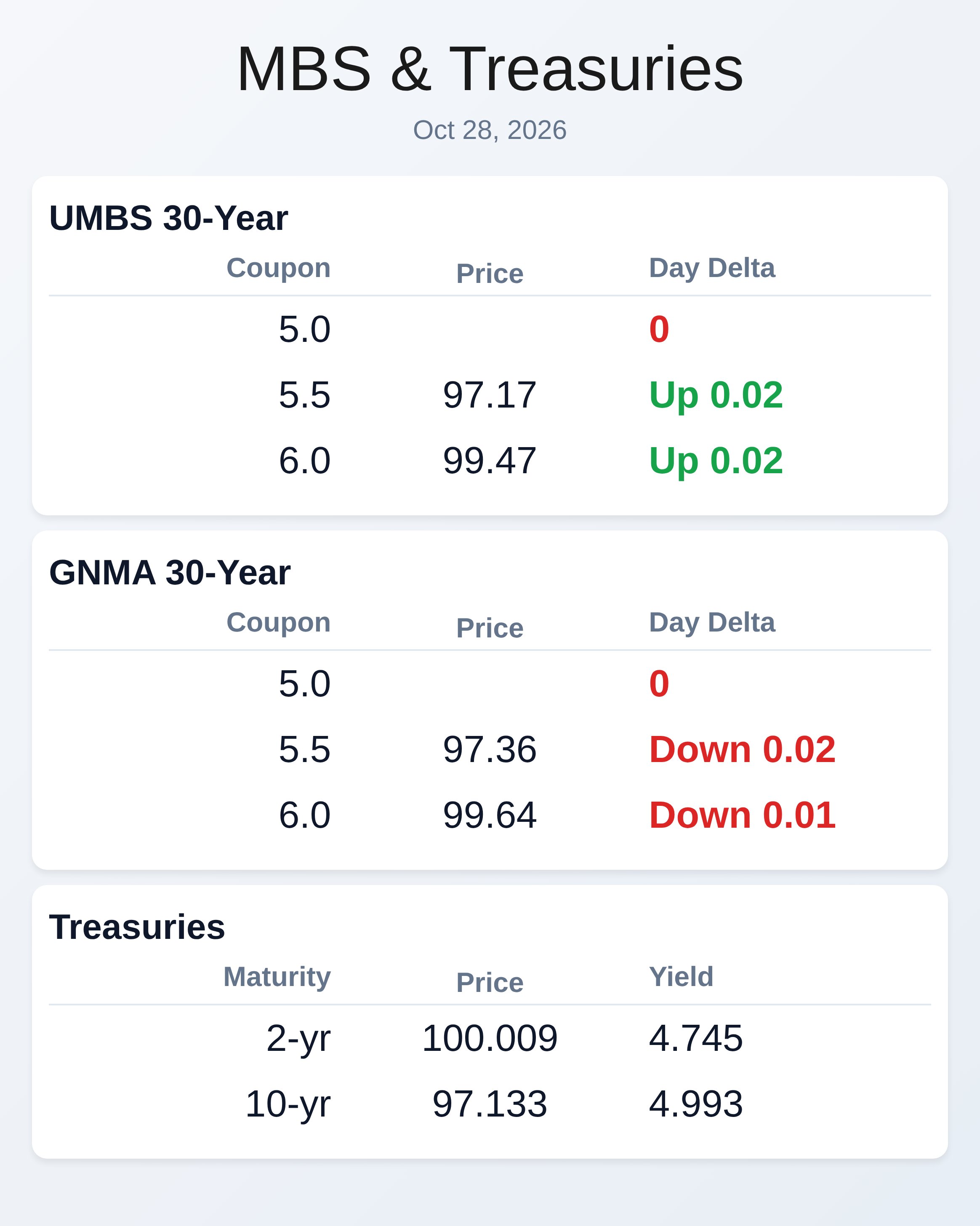
Mortgage markets are absorbing competing pressures this week as the Federal Reserve holds rates steady while signaling hawkish resolve, oil prices surge past $115 a barrel, and housing demand continues its slide despite modest rate relief. The 10-year Treasury is trading near 5.0 percent, down from 5.32 percent in early October following safe-haven flows driven by tech sector volatility and AI valuation concerns. Fannie Mae reported $4.2 billion in third-quarter net income with a near-$120 billion net worth position, reflecting the Government-Sponsored Enterprise’s recovery from the pandemic.
Industry layoffs at Freddie Mac and compressed margins across independent mortgage banks signal that the 2027 production forecast—now projected below $2 trillion, down 5 percent year-over-year by the MBA—is reshaping staffing and profitability expectations. Loan officer retention has become a critical concern as many lenders reduce positions or shift originators to part-time status amid the lowest purchase application volumes since the financial crisis. Non-QM and adjustable-rate mortgage products have gained meaningful share as borrowers and lenders adapt to elevated rates and shrinking affordability.
Pending home sales collapsed 7.3 percent in September while housing starts fell 5.2 percent, with builder confidence hitting its lowest level since June 2012 as rising financing costs and labor shortages squeeze margins. Home prices remain elevated despite modest appreciation of only 2.7 percent annually, forcing borrowers to choose between adjustable-rate mortgages and scaled-down home sizes. Fannie Mae’s occupancy verification flags and UAD 3.6 appraisal reporting requirements launching November 2 add compliance complexity and underwriting time.
Mortgage insurance repurchase activity jumped 19.5 percent in Q2 2026, with loans originated six to twelve months prior accounting for 46.5 percent of buyback volume, highlighting emerging credit and documentation concerns. Rocket Mortgage led repurchase share at 9.7 percent while Fannie Mae proved notably more aggressive than Freddie Mac on resolution rates. Treasury auction weakness, Federal Reserve runoff of Agency mortgage-backed securities portfolios, and geopolitical tensions over the Strait of Hormuz keep refinancing activity severely suppressed at 61 percent below year-ago levels.
FHFA Director Bill Pulte’s executive order directing proactive mortgage insurance cancellation and expanded title insurance waivers drew mixed reactions from MBA, brokers, and insurers, though implementation timelines remain uncertain and dependent on GSE guidance. The order addresses only refinancing relief and overlooks jumbo loan competition from banks and credit unions that cap origination fees and offer adjustable-rate products at more attractive pricing. Credit market stress from AI infrastructure financing concerns, combined with sticky inflation and labor-market questions, creates dual risks for lenders managing pipeline hedges and borrower lock expirations.
Markets will closely monitor third-quarter GDP data, PCE inflation readings, and initial jobless claims over the coming days, as every basis point of Treasury volatility translates into lock-and-hold decisions for loan officers caught between aggressive pricing and pipeline risk. Origination profitability remains compressed even as Fannie Mae’s solid capital position and reduced regulatory uncertainty provide some long-term confidence. Lenders who succeed in this environment are those investing in operational efficiency, non-Agency product diversification, and AI-assisted underwriting while maintaining disciplined credit and pricing strategies.
**Bond Pricing**
**UMBS 30 yr**
| Coupon | Price | Intra-Day Change |
**GNMA 30 yr**
| Coupon | Price | Intra-Day Change |
**Treasuries**
| Term | Yield | Price | Intra-Day Yield Change |