**WTMS Blog Today = What’s up in Mortgage Today (AM) – 11/26/2026**
The 30-year mortgage rate jumped to 7.28% this week, marking the first increase since early October as Treasury yields climbed on signs that inflation is heating up despite recent equity-market volatility. The rate rise ended a four-week winning streak and signals that the mortgage market remains highly sensitive to both inflation expectations and shifts in risk appetite, with borrowers who locked in earlier this month now facing a widening window of opportunity. The Federal Housing Finance Agency announced the 2027 conforming loan limit at $855,400, a $22,650 increase from 2026 that reflects 2.72% home price appreciation over the past year.
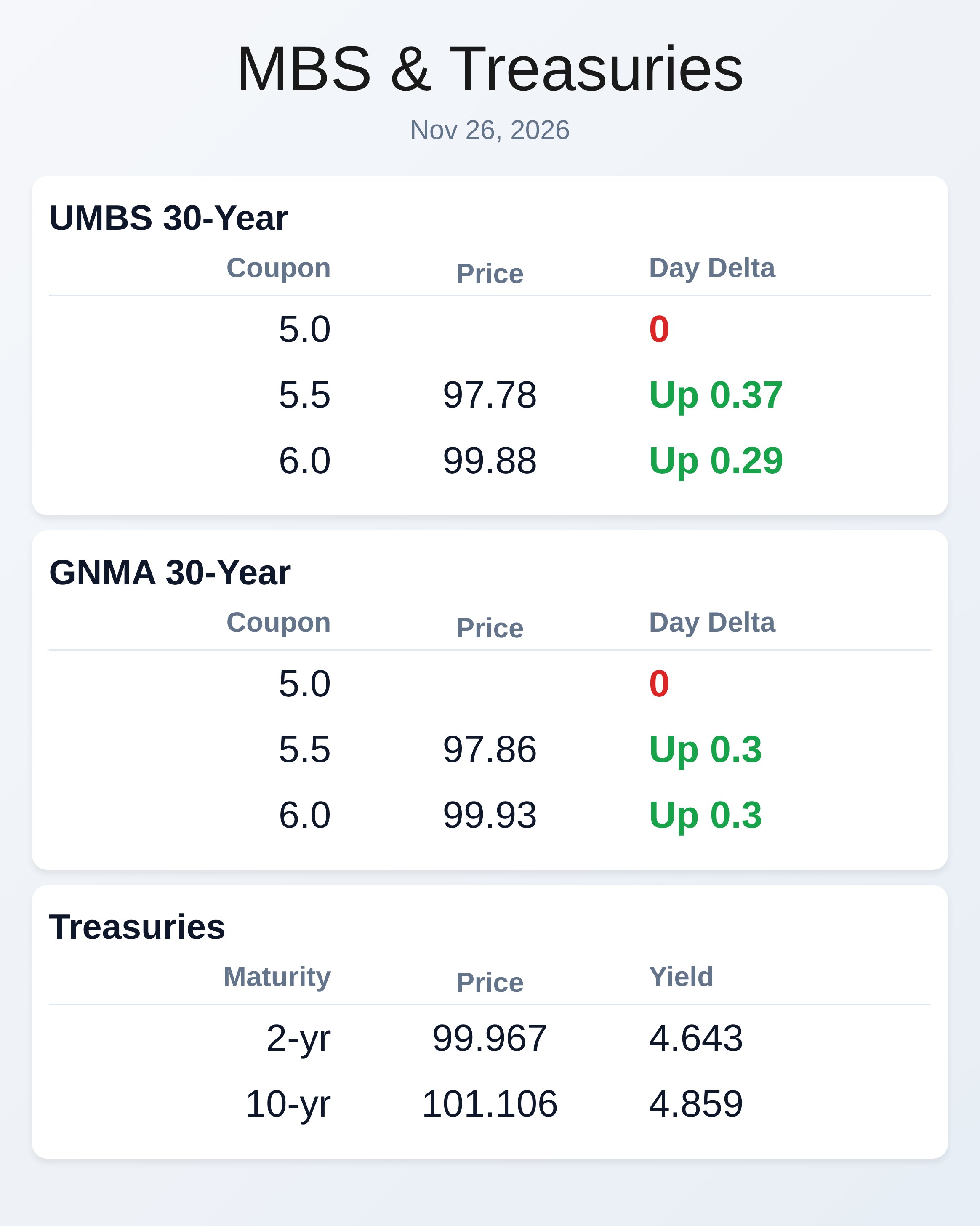
This higher ceiling opens additional business opportunities for lenders focused on the high-balance and jumbo segments, particularly as Ginnie Mae jumbo issuance remains relatively constrained at $50.8 billion, suggesting strong portfolio retention among jumbo borrowers who do not securitize. The increase also means that early estimates from lenders who set their limits at $845,000–$850,000 this fall will now need adjustment, creating operational shifts in LO compensation and pipeline management. The 10-year Treasury yield declined sharply from 4.971% at the start of the week to 4.847% by mid-week as equity-market weakness drove investors toward safe-haven assets, particularly after technology-sector concerns resurfaced over artificial intelligence valuations and governance issues at major chipmakers.
Mortgage spreads remained unusually wide relative to historical norms, limiting the pass-through of Treasury gains to consumers and keeping mortgage rates sticky near 7.25–7.38% despite the rally in underlying borrowing costs. This spread compression reflects elevated mortgage basis and reduced secondary-market liquidity as holiday trading approaches. Mortgage application volume jumped 6.1% for the week ending November 20, with purchase applications surging 10.2% in the strongest weekly gain since September, while refinancing activity remained depressed at just 0.5% week-over-week.
The MBA’s Joel Kan attributed the purchase rebound to moderating rates during the week, suggesting borrowers are actively monitoring market moves and pulling triggers when rates dip. Notably, adjustable-rate mortgage adoption climbed to 11.5% of applications—the highest level in more than a year—as borrowers sacrifice long-term certainty for lower starting payments in a challenging rate environment. Consumer confidence spiked dramatically in November, with the Conference Board’s index jumping from 91.9 in October to 103.3, exceeding economist expectations and rising to levels not seen since January 2025.
The board attributed the 11.4-point surge partially to “lower uncertainty” following the midterm elections and improved perceptions of labor-market and business conditions. For mortgage originators, this confidence recovery could signal renewed purchase-intent among qualified borrowers heading into the year-end holiday season, particularly if rates stabilize or decline further. Rocket Mortgage and Mr.
Cooper (Nationstar) will collectively pay $6.75 million to settle cybersecurity violations with New York’s Department of Financial Services, with Rocket paying $2 million for failing to report seven breaches within required 72-hour windows and Mr. Cooper paying $4.75 million for a 2023 breach that exposed substantially all customer data. The incident at Mr.
Cooper, where attackers used social engineering to bypass multifactor authentication, underscores the persistent vulnerability of lenders to basic security failures and regulatory scrutiny around data protection. With Rocket having acquired Mr. Cooper in 2025, the combined entity faces immediate pressure to audit multifactor authentication controls and demonstrate meaningful security improvements across the combined platform.
**Locking vs Floating**
Treasury volatility remains elevated as equity-market weakness alternates with brief risk-on rallies, creating whipsaw conditions that favor lenders who can communicate lock-in strategy clearly to borrowers. The wide mortgage basis suggests minimal improvement is likely without a sustained Treasury rally below 4.70%, so borrowers locking today accept current terms without betting on imminent relief. Those floating face execution risk if the December Fed rate-hike probability ticks above 25 basis points or if PCE data reignites inflation concerns.
**Today’s Events**
Today’s economic calendar includes limited data due to Thanksgiving observance, with no major releases scheduled before the market close. **Closing**
Subscribe free to WTMS at WellThatMakesSense.com for daily mortgage market insights delivered straight to your inbox.