**WTMS Blog Today = What’s up in Mortgage Today (AM) – 11/24/2026**
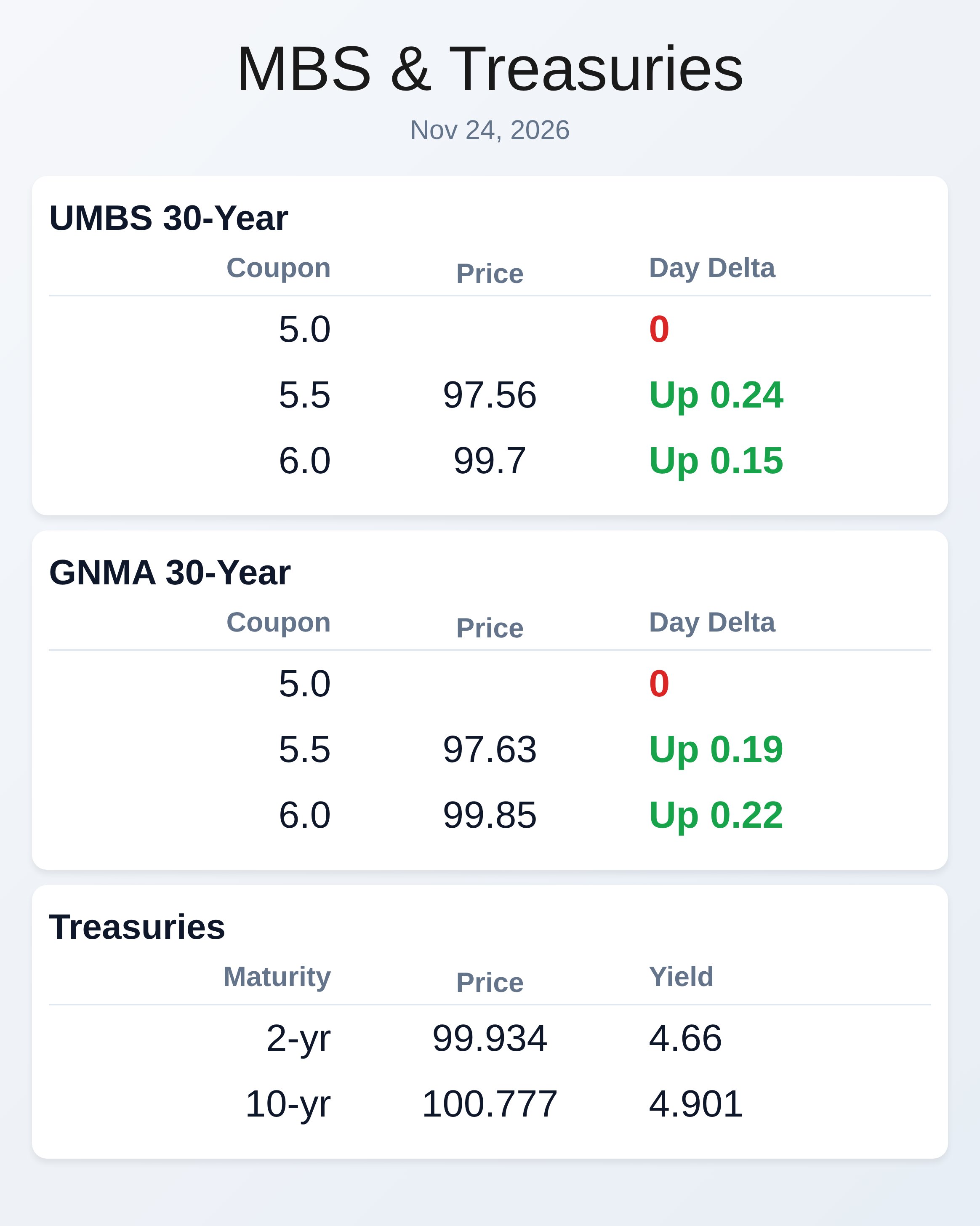
Jobless claims rose to 203,000 last week, slightly above economist estimates of 198,000, signaling a gradual softening in the labor market as continuing claims jumped 70,000 to their highest level in ten weeks. The weak employment signal combined with a severe tech-sector selloff drove investors toward safe-haven Treasury bonds, pushing 10-year yields down nearly 80 basis points last week before stabilizing near 4.89 percent. This flight-to-quality pattern underscores the growing disconnect between the Federal Reserve’s hawkish inflation rhetoric and financial markets that are now pricing in maximum one more quarter-point rate hike in 2026 and only two additional increases through 2027.
Mortgage rates rose to 7.28 percent for the 30-year fixed loan this week, ending a four-week decline, as conventional borrowers face a critical disconnect between Treasury yields and the rates they are actually offered. Despite last week’s sharp Treasury rally that should have compressed mortgage rates closer to 7.00 percent, elevated mortgage spreads and primary-to-secondary market gaps continue to limit rate improvement for consumers, leaving originators caught between competitive pressure and margin compression. This widening basis between bond yields and consumer rates is creating opportunity for lenders who can explain pipeline management and lock strategies to borrowers currently sitting on the sidelines.
A perfect storm of AI-sector disappointment, disappointing Anthropic post-IPO performance, geopolitical tensions over potential tariffs on China and other nations, and fears that vast AI spending cannot be sustained has triggered the longest global equity losing streak since September 2023, with the S&P 500 entering correction territory. The sell-off has forced traders to reprice expectations for Federal Reserve policy, with market probability for a 50-basis point December hike now collapsed to only 5 percent while the base case shifted firmly to quarter-point moves. This equity volatility and reduced odds for aggressive tightening are creating opportunities for lenders to retain locked loans and manage pipeline risk more carefully into year-end.
Cybersecurity failures are costing the mortgage industry real money, with Rocket Mortgage ordered to pay $2 million and Mr. Cooper ordered to pay $4.75 million to New York regulators for failing to report breaches timely and allowing threat actors to exploit weak multifactor authentication controls. These settlements underscore the accelerating cost of data breaches, with both companies now required to audit security controls within 90 days and implement stronger authentication protocols across their systems.
For originators, the message is clear: cybersecurity investment is no longer optional and regulatory fines are becoming a material line item in operating budgets. Independent mortgage banks recorded an average pretax loss of $30 per loan in the third quarter of 2026, a dramatic swing from the $973 per-loan profit in Q2, though servicing portfolios and ancillary revenue streams are providing critical offsets for companies retaining their platforms. MBA data reveals that roughly six in ten lenders still generated profitable quarters despite loan-level losses, indicating that consolidation, cost discipline, and diversified revenue are separating winners from struggling competitors.
As 2027 approaches, lenders without scale in servicing, meaningful non-delegated correspondent channels, or disciplined expense management face intensifying pressure to merge, sell, or scale aggressively. Artificial intelligence adoption is requiring far more organizational change than most lenders anticipated, with industry experts warning that simply plugging in an AI tool without process redesign, vendor partnership, and human quality control will result in disappointing returns. The real cost of AI is not the software license but the internal labor, training, and workflow redesign needed to unlock value, making vendor knowledge, implementation guidance, and long-term partnership as important as the technology itself.
Lenders evaluating AI vendors for 2027 must assess not just current capabilities but the vendor’s industry experience, ability to guide decision-making, and commitment to co-investing in organizational change.
**Locking vs Floating**
With Treasury yields near 4.89 percent and 30-year mortgage rates at 7.28 percent, borrowers face a widened spread that reflects elevated mortgage basis and limited secondary market demand. Lock decisions should weigh the probability of further Treasury declines (which appear likely given equity volatility and reduced Fed tightening expectations) against the risk of spreads widening further, potentially offsetting any bond rally benefit to consumers.
**Today’s Events**
Flash November Manufacturing and Services PMI released this morning. Home price indexes for September (FHFA and S&P Case-Shiller) are due at 9:00 a.m. EST.
Consumer Confidence data for November is expected at 10:00 a.m. EST. Treasury auctions include $70 billion 5-year notes at 1:00 p.m.
EST. ADP weekly payroll data was released earlier today showing private payrolls averaged 21,000 per week in the period ending November 7. Subscribe free to stay ahead of daily mortgage market shifts at WellThatMakesSense.com.