Claude’s Invisible Watermarks: Your AI Writing Now Has a Digital Tattoo (And You Didn’t Even Know It)
Anthropic just added invisible signatures to everything Claude writes—and if you’re a student, journalist, or anyone who’s ever copy-pasted AI text, this changes everything
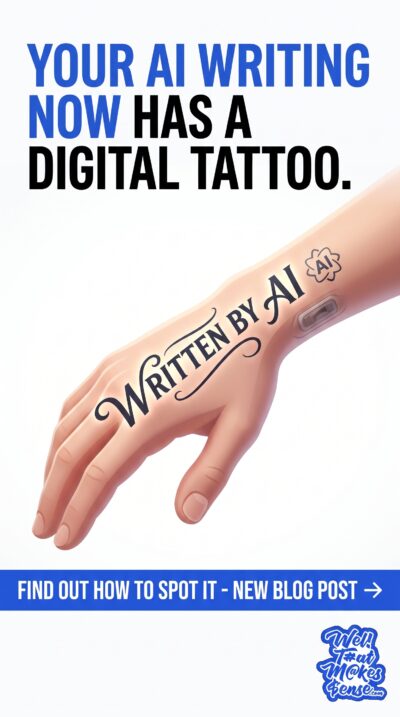
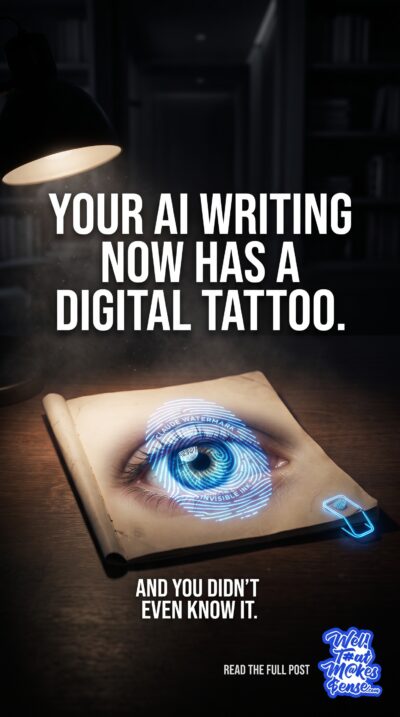
Picture this: You’re a college student at 2 AM, staring at a blank Google Doc, desperately asking Claude to help you understand supply and demand curves for your economics paper. Or maybe you’re a journalist on deadline, using AI to draft a quick summary of last night’s city council meeting. You copy, you paste, you submit. Done, right? Wrong. Because now, embedded invisibly in that text like a digital tattoo you never asked for, is a watermark that screams “AN AI WROTE THIS.”
Welcome to the brave new world of AI transparency, where Anthropic—the company behind Claude—just announced they’re slapping invisible watermarks on every piece of text, code, and file their AI generates. It’s like those security tags stores put on expensive jeans, except instead of beeping at the exit, this one follows your words wherever they go. Copy it into an email? Watermarked. Paste it into your term paper? Still watermarked. Screenshot it and send it to your study group? You guessed it—watermarked.
This isn’t some distant sci-fi scenario. It’s happening right now, and if you’ve used Claude after August 2, 2025, your AI-assisted content is already branded. The move is Anthropic’s response to the EU AI Act, which basically said “Hey, tech companies, if your robots are writing stuff, people deserve to know about it.” OpenAI, Google, Meta, and Microsoft all signed on too, which means this watermarking wave is about to crash across the entire AI industry.
How the Invisible Ink Actually Works (It’s Sneakier Than You Think)
Here’s where it gets interesting—and slightly creepy, depending on your perspective. Anthropic isn’t just slapping a visible “Made by AI” label on Claude’s outputs like some kind of digital nutrition facts panel. Instead, they’re embedding patterns into the text itself that are invisible to human eyes but detectable by software. Think of it like those UV stamps nightclubs use on your hand—looks like nothing under normal light, but shine the right detector on it and boom, there it is.
For files like images or documents, they’re using something called the C2PA standard, which is already industry-wide for marking AI-generated media. But for plain text? That’s where things get wild. The watermark survives copying and pasting, which means even if you take Claude’s output and move it around the internet like a digital hot potato, the signature stays attached. Anthropic says they’re also building detection tools so anyone can check if text was “processed by Claude”—though they’re careful to note that doesn’t necessarily mean Claude wrote it, just that it passed through Claude’s digital hands.
The company is retrofitting older models too, so eventually, everything Claude has ever touched will carry this invisible mark. It’s comprehensive, it’s persistent, and it’s making a lot of people very, very nervous.
What This Means If You’re a Student (Spoiler: Your Professor Might Get New Toys)
Let’s talk about the elephant in the lecture hall: academic integrity. Students have been using AI writing tools since ChatGPT burst onto the scene, and professors have been tearing their hair out trying to figure out who’s actually doing their own work. Now? Detection just got a whole lot easier.
Imagine submitting your essay on “The Symbolism of the Green Light in The Great Gatsby” (a classic), and your professor runs it through a watermark detector that pings every paragraph you had Claude help you “refine.” Even if you rewrote it in your own words, if you copied Claude’s suggestions as a starting point, that watermark might still be lurking in there like a digital breadcrumb trail leading straight back to AI assistance.
Here’s the thing though—and this is important—watermarks showing “processed by Claude” doesn’t automatically mean cheating. Maybe you used Claude to brainstorm ideas. Maybe you asked it to check your grammar. Maybe you had it explain a concept you didn’t understand, then wrote about it yourself. The watermark doesn’t distinguish between “Claude wrote this entire essay” and “Claude helped me understand this topic.” That’s a massive gray area that’s going to cause some serious headaches in academic settings.
Universities are already scrambling to update their AI policies, and this watermarking technology is about to force some very uncomfortable conversations about what “your own work” actually means in 2026. Is using AI like using a calculator in math class—a tool that’s fine once you understand the concepts? Or is it more like having someone else do your homework? The watermark can’t answer that question; it can only tell you the AI was involved.
Journalists Face a Different (But Equally Messy) Problem
Now let’s talk about newsrooms, where AI has become as common as stale coffee and missed deadlines. Journalists use AI tools for everything from transcribing interviews to drafting routine reports to researching background information. It’s efficient, it’s helpful, and now it’s all going to be stamped with an invisible “AI was here” mark.
For journalists, this creates a credibility minefield. News organizations have spent decades building trust with readers, and that trust is built on the assumption that human reporters are gathering, verifying, and writing the news. When readers discover that parts of articles were “processed by Claude,” even if it was just for routine tasks like summarizing public records or cleaning up quotes, it could erode that trust faster than you can say “fake news.”
Some newsrooms are already being proactive, adding disclosure policies about AI use. But watermarking takes that decision out of journalists’ hands. Even if a reporter used Claude to help organize their notes or draft an outline, that watermark could be interpreted by readers as “a robot wrote this article,” which isn’t accurate but is exactly the kind of nuance that gets lost in public discourse.
There’s also the competitive angle. If one news organization is transparent about AI use (whether by choice or because watermarks reveal it) while competitors hide their AI assistance by using non-watermarked tools or open-source models, who wins? The transparent outlet that follows the rules, or the one that keeps readers blissfully unaware? It’s a race to the ethical bottom that nobody really wants to run.
And here’s a fun twist: What happens when a journalist interviews someone who provides information that was prepared using Claude? Does that watermark transfer? What if a press release was AI-generated—does quoting it mean your article now carries an AI signature? The chain of custody for these watermarks is going to get complicated fast.
The Bigger Picture: Is This Dystopian Surveillance or Necessary Transparency?
The internet is pretty much split down the middle on whether Anthropic’s move is brilliant or terrifying. On one side, you’ve got people cheering for transparency. After all, shouldn’t consumers have the right to know when they’re reading AI-generated content? A recent study from Deezer found that 97% of listeners can’t tell the difference between human-made and AI-generated music. For text, the numbers are probably similar. We’re living in a world where AI slop is flooding the internet, and without some way to identify it, authentic human creativity gets drowned out.
From this perspective, watermarks are like ingredient labels on food—you have a right to know what you’re consuming. If you’re reading a blog post, applying for a job with a cover letter, or getting medical advice, knowing whether it came from a human brain or an algorithm seems like pretty important information. Companies like Spotify are adding “AI Personas” badges to non-human artists, and Substack just integrated AI detection tool Pangram so readers can see how much of a blog post was AI-written. Transparency is having a moment.
But the other camp sees this as the first step toward digital authoritarianism. Invisible watermarks that follow your text everywhere? That sounds like surveillance, not transparency. What if you use Claude to help write a private email, or a journal entry, or a love letter? That watermark is still there, potentially detectable by anyone with the right tools. It’s like having a government stamp on every thought you’ve ever had help articulating.
There’s also the practical concern that bad actors won’t care about watermarks. They’ll just use open-source models, or tools from companies that don’t implement watermarking (looking at you, xAI, which notably didn’t sign onto the EU AI Act). So you end up with a system where honest users and legitimate companies are marked and monitored, while scammers, propagandists, and cheaters simply route around the restrictions. It’s the classic cybersecurity problem: build a 10-foot wall, and bad guys show up with a 12-foot ladder.
And then there’s the philosophical question that keeps me up at night: Will people eventually stop caring? Right now, there’s general resistance to AI-generated content, especially when it pretends to be human-made. But as AI gets better and more ubiquitous, will we reach a point where nobody really cares whether a human or a machine wrote something, as long as it’s useful and accurate? If that happens, all these watermarks just become digital clutter, marking a distinction that society has decided doesn’t matter anymore.
What Happens Next (Hint: It’s Complicated)
Here’s what we know for sure: Claude’s watermarking is live for newer models, it’s coming to older ones, and other major AI companies are likely implementing similar systems to comply with the EU AI Act. Detection tools are being developed and integrated into platforms from Substack to university plagiarism checkers. The infrastructure for identifying AI-generated content is being built right now, whether we’re ready for it or not.
For students, this means getting very, very clear on your school’s AI policies and being prepared to explain exactly how you used AI tools in your work. Document your process. Save your drafts. Be ready to prove that even if AI was involved, the thinking was yours. Academic integrity offices are about to get a lot busier.
For journalists, it means newsrooms need AI disclosure policies yesterday. Readers deserve to know how AI is being used in their news, and reporters deserve clear guidelines about what’s acceptable. The alternative is a credibility crisis when watermarks reveal AI use that was never disclosed.
For everyone else? It means developing AI literacy. Learn how these tools work, what watermarks mean (and don’t mean), and how to think critically about the content you consume. Because whether you’re reading a blog post, a news article, or your kid’s homework, you’re about to be living in a world where the line between human and AI authorship is both more visible and more complicated than ever before.
The real question isn’t whether AI watermarking is good or bad—it’s both, depending on who you ask and what you’re trying to accomplish. The real question is how we’re going to navigate a world where every word might carry an invisible signature, and what that means for creativity, authenticity, and trust in the digital age.
One thing’s for sure: The days of using AI writing tools in blissful anonymity are over. Your words have a digital tattoo now. Make sure you’re okay with what it says about you.