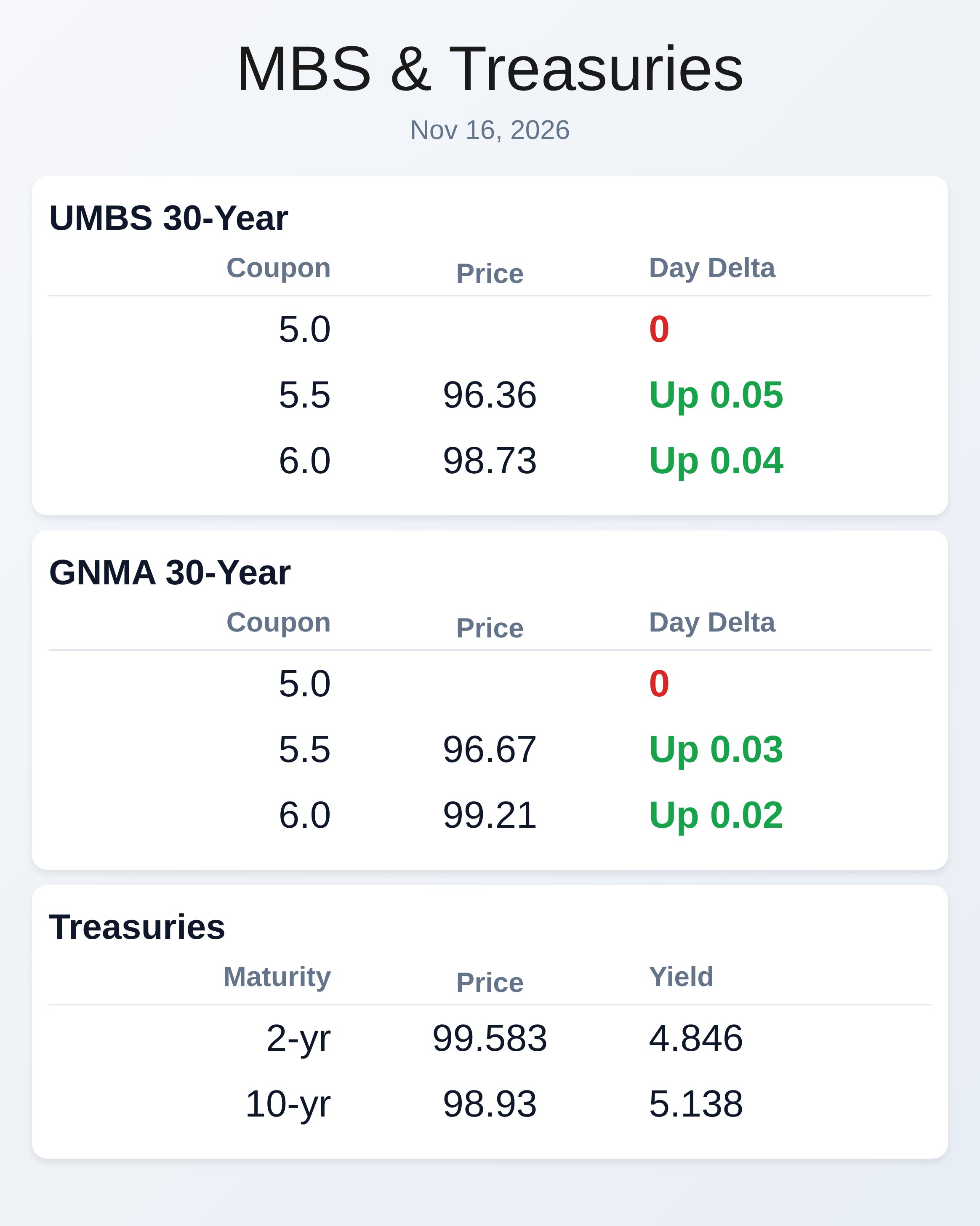
**WTMS Blog Today = What’s up in Mortgage Today (AM) – 11/16/2026**
Fed rhetoric and persistent inflation dominated capital markets this week, pushing the 10-year Treasury yield from 4.89% on Tuesday to 5.15% by Friday—a 26-basis point surge that wiped out mortgage rate improvements accumulated over five weeks. Hawkish commentary from Federal Reserve Governor Christopher Waller and hotter-than-expected October inflation readings (core CPI at 0.3% versus 0.2% forecast) fully priced in a December rate hike with traders increasingly betting on a potential 50-basis point move if inflation accelerates further. The market’s hawkish repricing left mortgage origination margins compressed and purchase activity depressed, with the average 30-year fixed rate climbing to 7.50% by week’s end.
Mortgage-backed securities experienced broad selloff pressure as Treasury yields climbed and spreads widened, with production coupon prices down approximately 1.5 points and discount coupons falling more than 2 points by Friday. Ginnie Mae securities and 15-year mortgages showed relative resilience compared to conventional MBS, reflecting the growing share of government-backed lending in the market. The Par Note Rate increased 37.5 basis points to 7.37% while average daily TBA trading volumes contracted by roughly 20%, signaling lender reluctance to lock positions ahead of uncertain Fed action.
Credit availability remains historically constrained with mortgage credit increasing just 0.4% in October, particularly impacting government-backed borrowers and lower-income households seeking to maintain existing rates or refinance. Ginnie Mae issuance has surged to a record 42% of agency mortgage-backed securities year-to-date and reached 47% in October, now exceeding Fannie Mae and Freddie Mac individually as FHA and VA financing become the primary avenue for borrowers unable to qualify through conventional channels. This structural shift toward government programs changes the risk and performance profile of agency securities, as these borrowers typically carry lower credit scores and higher delinquency rates than conventional borrowers.
Existing home sales collapsed to their lowest level since August 2010, falling 5.5% month-over-month in October to an annualized rate of 3.75 million, down 8.8% year-over-year as mortgage rates above 7% and persistent inflation crushed affordability. All four U.S. regions recorded year-over-year declines, with the West experiencing its weakest sales pace on record since 1999, highlighting the breadth of weakness across the housing market.
Construction lending standards tightened for the 19th consecutive quarter, further constraining inventory and limiting options for buyers navigating both rate and affordability headwinds. Movement Mortgage secured an arbitration ruling requiring two former loan officers to repay $1.235 million in signing bonuses after they departed within two years of three-year employment commitments, signaling lenders’ aggressive enforcement of clawback provisions amid tight labor markets. Paramount Residential Mortgage Group expanded production by hiring a 100-person team from Gold Star Mortgage, the second major team acquisition in 90 days, though notably without offering signing bonuses or company buyouts, instead providing revenue sharing and transition funding.
These talent dynamics reflect a bifurcated origination market where established lenders compete fiercely for top producers while conservative pricing strategies and constrained margins limit cash available for traditional recruitment incentives. The Federal Reserve published its 2027 meeting schedule, designating October as a Monetary Policy Strategy session and signaling potential policy reassessment heading into an election year. FHA updated acceptable credit score models to include VantageScore 4.0 and FICO Score 10T alongside Classic FICO, while USDA Rural Development expanded loan eligibility to include properties with income-producing accessory dwelling units, slightly broadening borrower access in rural markets.
These regulatory adjustments offer modest opportunities to reach previously underserved borrowers, though elevated rates and tight credit standards will likely prevent meaningful volume gains in the near term absent a significant shift in Fed policy.
**Locking vs Floating**
With the Fed fully pricing in a December rate hike and volatile Treasury market action creating whipsaw conditions, lenders should advise borrowers to lock rates immediately if they intend to close within 90 days. Floating strategies carry uncompensated risk given the flat-to-inverted curve and lack of technical support; the market requires either Fed pivot signals or significant economic deterioration to generate meaningful rate declines from current levels.
**Today’s Events**
Retail sales data, industrial production figures, housing starts and building permits, and FOMC minutes are on this week’s economic calendar. Fed speakers including Kevin Warsh, Lorie Logan, Barr Bowman, and others will address market participants. Nvidia earnings and Anthropic’s initial public offering represent key corporate events that could influence sentiment and risk appetite.
**Bond Pricing**
**UMBS 30 yr**
| Coupon | Price | Intra-Day Change |
**GNMA 30 yr**
| Coupon | Price | Intra-Day Change |
**Treasuries**
| Term | Yield | Price | Intra-Day Yield Change |
**Closing**
Stay informed on market shifts and lending strategy pivots—subscribe free to WellThatMakesSense.com for daily mortgage intelligence.