
“Damn, there is so much great knowledge out there. Did you know that “BOOKS” are full of smart?? No, I mean like life changing, I-wish-I-knew-that-years-ago type stuff.
I know that I was waaaayyy late to the game figuring it out. And I know that a lot of you are too busy to read as much as you ‘should’. And that is why you need me.
I still remember how it started for me. It started in June of 2008. After 11 years …..Click to continue
November 4, 2026
The tech world is arguing about AI again, and this time it actually affects your mortgage pre-approval.

Picture this: you're scrolling Twitter at lunch, and your feed erupts with a thread about AI that's racked up 40,000 retweets. Tech executives are quote-tweeting each other. Researchers are posting charts. Someone with "AI Safety" in their bio is arguing with someone whose company just raised $200 million. You recognize maybe two names, understand maybe half the sentences, and wonder if any of this affects your life.
Spoiler: when the debate is about AI decision-making systems, it absolutely does. Especially if you're planning to buy a house in the next year.
The mortgage industry has quietly become one of the biggest real-world laboratories for the exact AI tools these Twitter arguments are about. While tech leaders debate whether AI can be trusted to make high-stakes decisions, your lender is already using it to decide whether you qualify for a loan. Let's decode who's talking, what they're actually arguing about, and why your pre-approval letter might depend on the outcome.
The Cast of Characters: Who These People Actually Are
When a Twitter AI debate goes viral, you're usually watching three distinct groups talk past each other, and knowing who's who matters because their incentives shape what they say.
First, the builders: CEOs and CTOs of AI companies, often with names like Anthropic, OpenAI, or startups you've never heard of that just raised eight figures. They're optimistic about AI capabilities because their companies depend on adoption. When they say "AI can handle complex decisions," they mean "please use our product." Not dishonest, just not neutral. These are the folks posting demos and talking about "transformative potential."
Second, the researchers: computer science professors, lab directors at universities, and independent AI safety specialists. They're the ones sharing papers, pointing out failure modes, and using phrases like "alignment problem" or "hallucination rates." Their incentive is reputation within their field, which means they're often more cautious. When they say "AI isn't ready for high-stakes decisions," they mean "my research shows specific failure patterns we haven't solved."
Third, the critics: journalists who cover tech, policy advocates, and people who've been burned by algorithmic systems. They're sharing stories about AI denying someone's insurance claim or flagging a resume incorrectly. Their incentive is accountability, and they're often the only ones asking "who gets hurt when this goes wrong?"
None of these groups is lying. They're just standing in different places, looking at the same technology, and seeing different things. The mortgage industry is caught in the middle, trying to figure out which group is right.
The Debate Decoded: What They're Actually Arguing About
Strip away the jargon, and most viral AI debates boil down to one question: can we trust machines to make decisions that used to require human judgment?
The specific flavor changes. Sometimes it's about whether AI should diagnose medical conditions. Sometimes it's about whether it should screen job applicants. Sometimes it's about whether it should write news articles or generate images. But the underlying argument is always the same: at what point does "this tool is helpful" become "this tool is making choices we don't understand and can't easily override"?
The optimists argue that AI is already better than humans at certain narrow tasks, that it's faster and more consistent, and that holding it to a standard of perfection while tolerating human error is unfair. They point out that loan officers have biases too, that appraisers make mistakes, that every system has flaws. They're not wrong.
The skeptics argue that AI fails in different ways than humans do, often at scale, and that we're deploying it before we understand those failure modes. They point out that when an AI system denies your loan, you often can't get a clear explanation why, and that "the algorithm said no" becomes a shield against accountability. They're not wrong either.
The mortgage connection: this isn't theoretical. Right now, as you read this, AI systems are scanning your bank statements, predicting your likelihood of default, and flagging applications for additional review. The Twitter debate is about whether that's progress or a problem we're going to regret. (Spoiler: maybe both.)
How AI Is Already In Your Mortgage Process (Whether You Know It Or Not)
Let's get uncomfortably specific about where AI has already moved from "interesting experiment" to "standard operating procedure" in home lending.
Automated underwriting systems have existed since the 1990s, but they've gotten dramatically more sophisticated in the past five years. Fannie Mae's Desktop Underwriter and Freddie Mac's Loan Product Advisor now use machine learning to analyze hundreds of data points about your financial life. They're not just checking boxes anymore. They're making predictions about risk based on patterns in millions of previous loans. When your loan officer says you got an "automated approval," an AI made that call in about eight seconds.
Income and asset verification has gone the same direction. Companies like Truework and Plaid use AI to pull your employment history and bank account data directly from source systems, then flag inconsistencies or potential fraud. The AI doesn't just verify that you have $50,000 in savings. It analyzes your deposit patterns to predict whether that money is actually yours or borrowed for the application. Some lenders report this cuts verification time from five days to five minutes.
Property valuation is the newest frontier. Automated valuation models, or AVMs, use AI to estimate home values based on comparable sales, tax records, satellite imagery, and even street-level photos. Fannie Mae now allows some refinances to close without a human appraiser ever visiting the property. The AI looks at your house from space, compares it to similar homes, and spits out a number. Your equity—and whether you can refinance—depends on what it sees.
This is why the Twitter debate matters. When tech leaders argue about AI reliability, they're arguing about the tools deciding whether you qualify for a mortgage. When researchers point out AI bias, they're talking about systems that might treat your application differently based on patterns the algorithm learned from historical data. When critics demand transparency, they're asking why you can't get a clear answer when the AI says no.
The Real Estate Side: How AI Is Changing Your Home Search
Mortgage pre-approval is only half the story. The house-hunting process itself has become an AI showcase, and not always in ways that help you.
Zillow's Zestimate is probably the most famous real estate AI, and its history is instructive. The company got so confident in its algorithm's ability to predict home values that it started buying houses based on those predictions. Then the AI got it wrong, consistently, and Zillow lost more than $500 million before shutting down the program in 2021. The Zestimate still exists—you've probably checked it—but the company learned that predicting home prices is harder than it looks, even with massive amounts of data. The algorithm is helpful. It's not omniscient.
Recommendation engines are everywhere now. Redfin, Realtor.com, and Zillow all use AI to suggest properties based on your search history and behavior. The systems learn what you click on, how long you look at listings, and which features seem to matter to you. Then they surface similar homes. Sounds helpful, and often it is. But the AI is also making assumptions about what you want based on what people like you have wanted in the past, which means it might never show you the neighborhood or property type that doesn't fit your pattern. You're not searching the whole market anymore. You're searching what the algorithm thinks you'll like.
Pricing strategy tools are the newest wrinkle. Some agents now use AI to recommend listing prices and predict how long a home will sit on the market. The systems analyze local inventory, buyer demand signals, and seasonal patterns to suggest optimal pricing. For sellers, this can mean faster sales. For buyers, it means you're increasingly competing against algorithmic pricing rather than human intuition. The days of finding a mis-priced gem because the seller's agent guessed wrong are fading. The AI doesn't guess.
The Bias Problem Nobody Wants to Talk About (But We Should)
Here's where the Twitter debate gets uncomfortable and directly relevant to your mortgage application.
AI systems learn from historical data, and if that data contains patterns of discrimination, the AI learns to discriminate. This isn't theoretical. In 2019, the Department of Housing and Urban Development charged Facebook with housing discrimination because its ad-targeting algorithm was showing real estate ads differently based on race, even though race wasn't explicitly in the data. The AI had learned to use proxies—zip codes, interests, engagement patterns—that correlated with protected characteristics.
Mortgage AI faces the same challenge. If historical loan data shows that applicants from certain neighborhoods defaulted more often, the AI might learn to flag applications from those areas for extra scrutiny. The algorithm doesn't know why the pattern exists. It doesn't know that the neighborhood was historically redlined, that residents had less access to financial education, or that previous lenders made predatory loans there. It just knows the pattern, and it acts on it. The result can be modern discrimination wearing the mask of objective data analysis.
Lenders are aware of this and testing for it, but the solutions aren't simple. You can't just remove sensitive variables like race or zip code from the data, because the AI will find other variables that correlate. You can't easily explain why the AI flagged your application, because modern machine learning systems are often black boxes even to their creators. And you can't assume that because the system is mathematical, it's fair. Math can encode bias just as easily as humans can.
This is what researchers mean when they talk about AI alignment and fairness. It's not academic philosophy. It's the difference between getting approved for a mortgage and getting denied for reasons you'll never fully understand.
What This Means for Your Next Home Purchase: Practical Implications
So you're not building AI systems or debating them on Twitter. You just want to buy a house. What does any of this mean for your actual homebuying journey?
First, understand that speed comes with tradeoffs. When your lender advertises "pre-approval in 10 minutes," that's AI at work, and it's genuinely convenient. But it also means you're being evaluated by a system that might not account for nuance in your financial situation. If you're self-employed, if you have irregular income, if you've recovered from a financial setback, the AI might flag you as risky before a human ever reviews your story. You may need to specifically ask for human underwriting if the automated system says no.
Second, don't treat algorithmic estimates as gospel. Whether it's a Zestimate, an AVM for refinancing, or an AI-powered home recommendation, remember that these are predictions based on patterns, not assessments of your specific property or needs. The AI doesn't know that the house on the corner has a foundation issue, that the neighborhood is about to get a new school, or that you specifically need a first-floor bedroom. Use the tools. Don't let them make your decisions.
Third, ask questions when you don't get clear answers. If your loan is denied or your interest rate is higher than expected, you're legally entitled to an adverse action notice explaining why. If that explanation is vague or references "credit scoring models," push back. Ask to speak with an underwriter. Request specific reasons. The fact that an AI made the initial decision doesn't mean you've lost the right to understand and challenge it.
Fourth, diversify your data trail. Because AI mortgage systems increasingly pull from non-traditional data sources, your digital financial life matters more than it used to. Regular deposits, consistent income, and clean bank statements help. Large unexplained transfers, frequent overdrafts, or irregular deposits can trigger flags. You're not just managing your credit score anymore. You're managing your entire financial data footprint.
Your Next Step: Navigate the AI Mortgage Landscape Without Losing Your Mind
The Twitter debate about AI will continue long after you've closed on your house. Tech leaders will keep building. Researchers will keep warning. Critics will keep questioning. You don't need to solve the philosophical questions to navigate the practical reality.
What you do need: awareness that AI is already in your mortgage process, understanding that it brings both efficiency and new risks, and willingness to advocate for yourself when the algorithm gets it wrong. The systems are tools, not oracles. Treat them accordingly. And when your loan officer says the "system" flagged something, remember that systems are built by humans, trained on imperfect data, and absolutely open to question. The AI doesn't get the final word on whether you can buy a house. You do.
You made it through an entire post about AI without anyone saying "delve" or "game-changer." That deserves recognition. If you want more mortgage industry insights decoded into actual English—plus the occasional rant about why things work the way they do—subscribe to Well That Makes Sense at WellThatMakesSense.com and follow us on social. We promise the robots haven't written our content yet. (They tried. We sent them back for revision.)

November 3, 2026
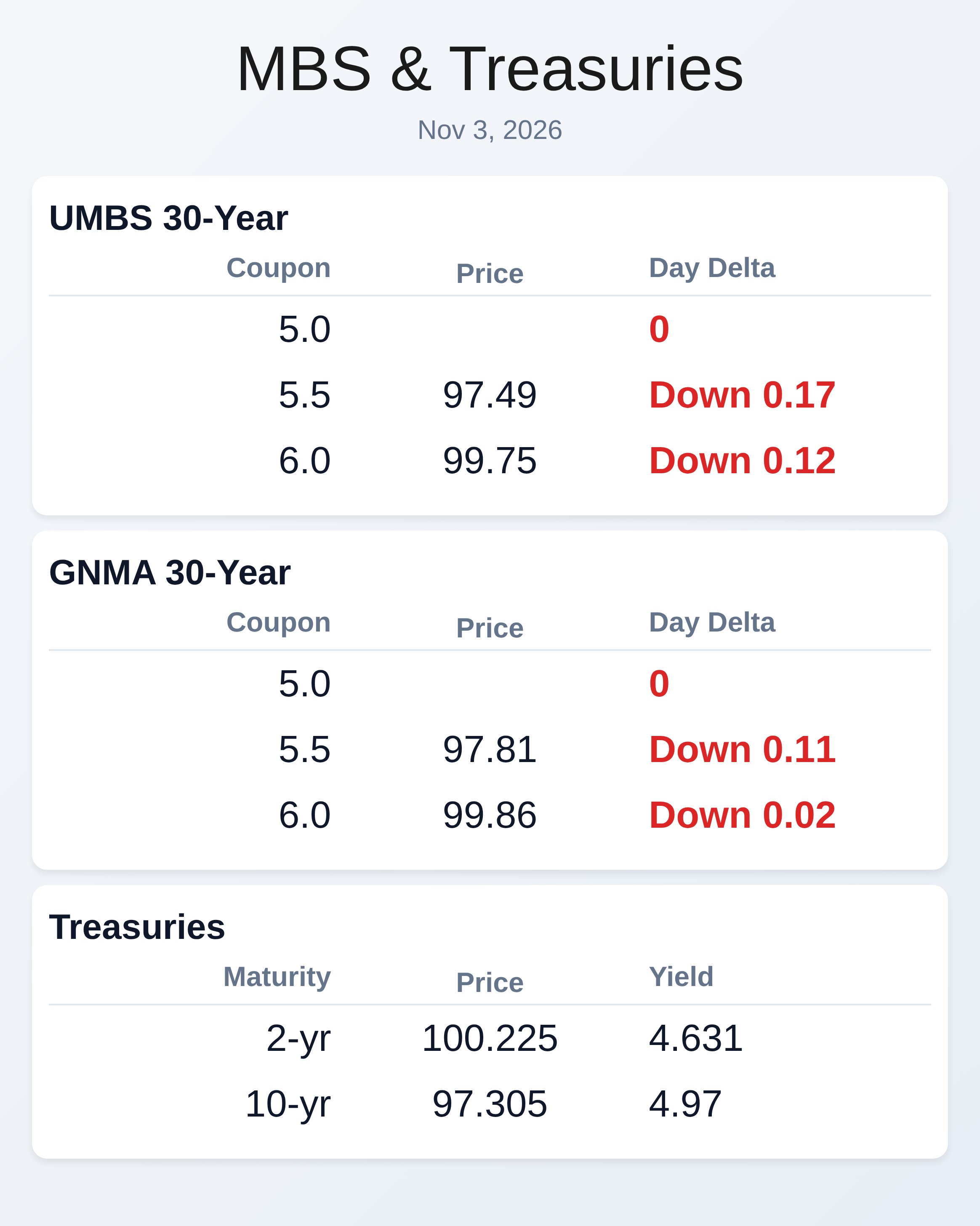
November 3, 2026

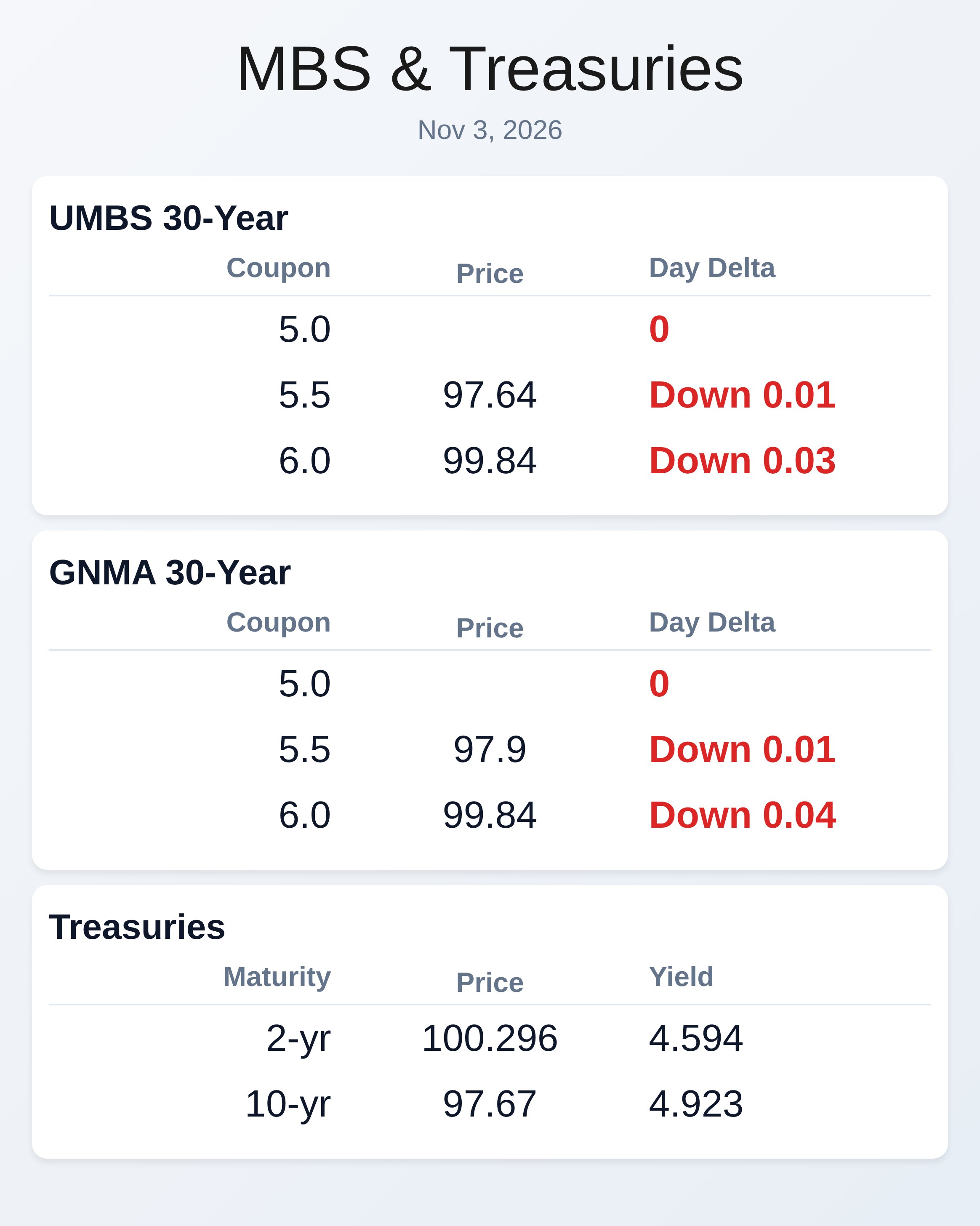
RECENT ARTICLES

Mortgage Today 06/20/24: UMBS Down as Jobless Claims and Housing Starts Miss Forecasts
Your Content Goes Here
My (Video) Reading Notes for “The Way of the Wolf” by Jordan Belfort – Part 3
My Reading Notes for: The Way of the Wolf by Jordan Belfort ???? The Way of the Wolf by Jordan Belfort. Language. Go from less invasive to more invasive on your questions. And [...]
Article Archive