**WTMS Blog Today = What’s up in Mortgage Today (AM) – 09/23/2026**
Mortgage rates surged to 7.12% last week, the highest level since 2024, forcing application volume down 1.5% and pushing nearly one in ten borrowers toward adjustable-rate mortgages. Refinance activity collapsed to its lowest level since February 2025, with refi applications down 62% year-over-year. The 30-year fixed is now more than a percentage point above ARM rates, making the exotic product suddenly attractive during this affordability crisis.
Purchase applications slipped just 1% week-over-week but remain 11% lower than last year. As the fall market officially begins, real estate agents are already reporting a sharp pullback from prospective buyers. War headlines and oil price volatility are dominating bond market attention, with geopolitical uncertainty creating daily swings that overwhelm economic data.
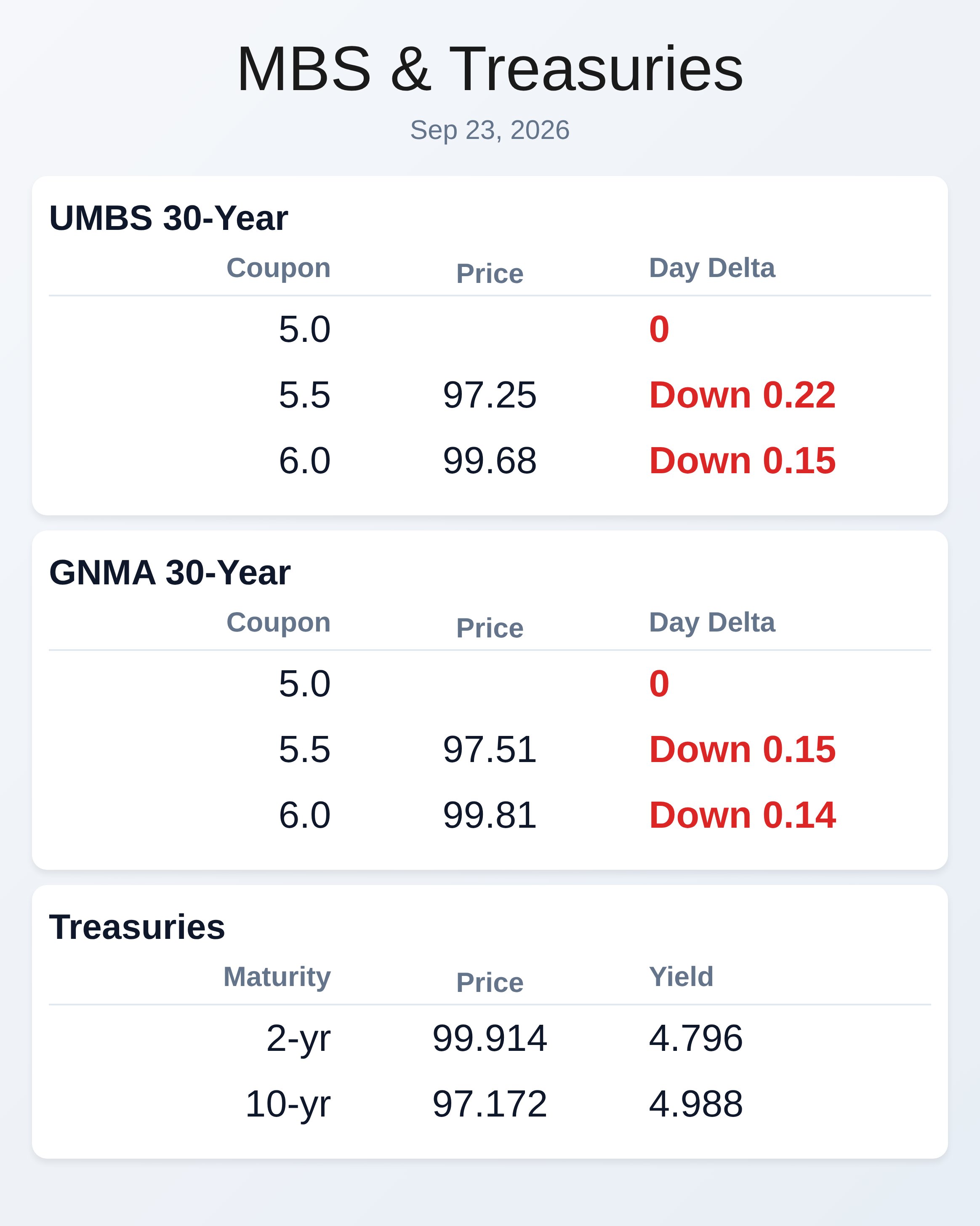
Late yesterday, reports of productive U.S.-Iran negotiations temporarily stabilized Treasuries and helped the market absorb a $69 billion 2-year note auction. The 10-year Treasury sits at 4.988%, while Agency MBS prices remain little changed from yesterday’s close. Without a clear catalyst for rate relief, the structural deficit and persistent oil concerns should keep upward pressure on long-end yields.
The Fed’s public silence on skyrocketing fiscal spending contrasts sharply with its aggressive stance on inflation tied largely to crude oil pricing. Homebuilders are increasingly dependent on FHA-financed buyers to move volume during this cyclical slowdown. Ashton Woods has seen FHA-financed sales surge from 15% of total transactions in 2022 to 39% today.
This trend reflects broader affordability pressures squeezing move-up buyers out of traditional markets. The shift demonstrates how housing affordability deterioration is forcing both lenders and builders to lean more heavily on government-backed programs. KB Homes warned in earnings that market conditions have weakened significantly since June, with higher rates and buyer hesitation dampening demand.
Fannie Mae is tightening documentation requirements for investors converting homes into rentals, eliminating lease agreements as acceptable proof of rental income effective November 1. Lenders must now use appraisals, Form 1007, or comparable market data from sources like Zillow or MLS with three recent comps. Move-up buyers benefit because they no longer need an existing tenant before applying, though the qualifying math remains unchanged with a 25% reduction for vacancy and expenses.
Freddie Mac maintains a more flexible approach, still accepting leases and refusing market-analysis tools. Lenders must verify which GSE they’re delivering to before presenting rental income strategies to borrowers. A bipartisan proposal would provide up to $50,000 in down payment assistance to first-time homebuyers, addressing the affordability crisis gripping the market.
The legislation represents a direct response to the mounting pressure consumers face as rates hover near 7% and median home prices remain historically elevated. Zillow faces a new legal challenge seeking to dismiss a RESPA lawsuit accusing the platform of steering borrowers to its in-house mortgage business through its real estate referral program. The court has already rejected two previous versions of the complaint, and Zillow is now pushing for permanent dismissal with prejudice.
Pending home sales edged up just 0.3% in August, suggesting buyer activity remains tepid despite seasonal expectations. UAD 3.6 appraisal format changes are driving costs higher as appraisers navigate expanded inspection requirements and extended reporting timelines. Class Valuation’s analysis shows appraisers already charging premium fees due to the added labor and time demands of the new standards.
Hybrid appraisals that meet UAD 3.6 data capture standards offer lenders faster turnarounds and lower pricing, making them increasingly attractive as traditional appraisal fees climb week-to-week. Lenders should disclose longer appraisal timelines now and prepare borrowers for extended underwriting schedules over the next 90 days. Ignoring hybrid appraisal options during this transition period could cost originators both time and revenue as conventional processing delays mount.
**Locking vs Floating**
War and oil volatility are controlling daily bond moves without creating a directional bias. Technical levels remain relevant between 4.93% and 5.01% on the 10-year, so traders should wait for a definitive break outside this range before shifting lock-float strategy. The default conservative stance established in July remains unchanged—originators should maintain cautious locking discipline until a clear rally develops in bond pricing.
**Today’s Events**
Fed Governor Barr remarks, preliminary S&P Global Manufacturing PMI, Services PMI, crude oil inventory reports, and a $70 billion 5-year Treasury note auction are scheduled for later today.
**Bond Pricing**
**UMBS 30 yr**
| Coupon | Price | Intra-Day Change |
| 5.5 | 97.25 | -0.22 |
| 6.0 | 99.68 | -0.15 |
| 5.5 | 97.51 | -0.15 |
**GNMA 30 yr**
| Coupon | Price | Intra-Day Change |
**Treasuries**
| Term | Yield | Price | Intra-Day Yield Change |