**WTMS Blog Today = What’s up in Mortgage Today (PM) – 10/22/2026**
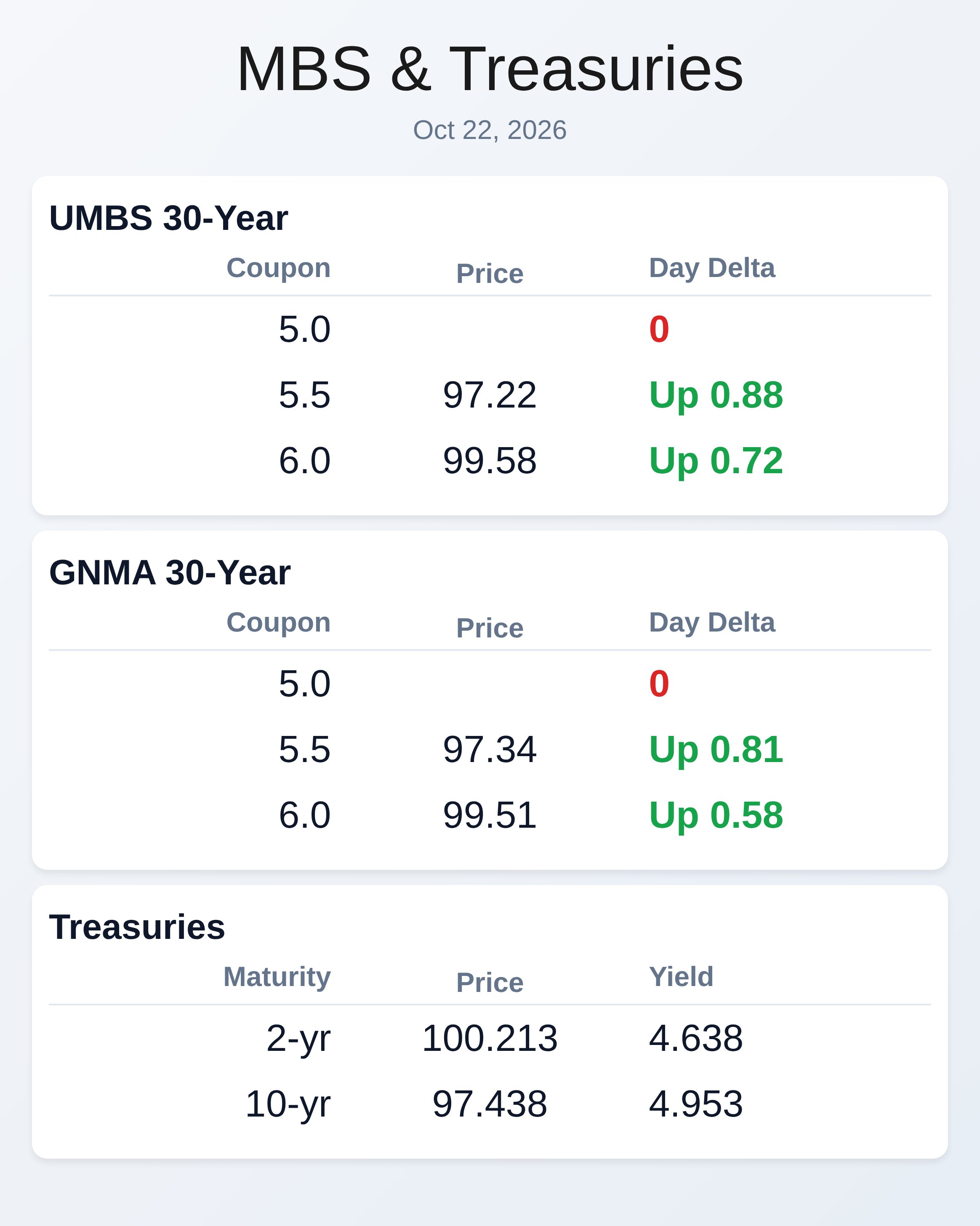
Mortgage rates staged their best rally since August 2025 as technology stocks cratered, sending investors into the safety of bonds despite crude oil surging above $112 per barrel on Middle East tensions. The 10-year Treasury yield plummeted 16 basis points to 4.959%, with the entire curve rallying at least 10 basis points across all maturities. Concerns about artificial intelligence investment sustainability—not traditional economic data—drove the flight to quality, overwhelming inflation worries that have dominated markets for months.
UMBS 6.0 coupons surged nearly 70 basis points, marking genuine relief for mortgage originators after weeks of pressure. Traders have now fully priced in a January rate increase instead of December, suggesting the Fed’s tightening cycle may be approaching its end. The bond market’s dramatic turnaround reflects a fundamental shift in which risk matters more to investors right now.
When semiconductor stocks fell 6.6% to their lowest levels since late July, money rushed into Treasuries regardless of geopolitical oil shocks or sticky inflation readings. Even surging Brent crude couldn’t overcome the safe-haven bid sparked by uncertainty around AI spending plans and corporate earnings. This behavior pattern—where asset-class sentiment overrides inflation data—marks a departure from the summer’s rate-hiking narrative.
If tech stabilizes, however, the entire rally could reverse just as quickly. The French debt crisis added an unexpected tailwind to US Treasuries as the euro zone’s structural challenges reassured American investors of relative stability. French 10-year yields exceeded German counterparts by 170 basis points, the widest spread since 2011’s debt panic.
This regional turmoil sent European investors shopping for US government bonds, adding to domestic haven demand. While mortgage professionals focus on immediate rate relief, the underlying cause—global financial stress—is not inherently positive for housing market fundamentals. Still, every basis point lower helps originators move stalled pipelines and quotas.
Housing data remains secondary to market sentiment at the moment, with origination forecasts hovering around $2 trillion for 2027 and purchase applications down 16% year-over-year. The pending home sales index hit a 12-year low, underscoring the affordability crisis despite today’s modest rate improvement. Sellers continue outnumbering buyers by 63%—a record gap since records began in 2013—suggesting that even lower rates won’t immediately solve inventory problems.
Loan officer employment pressures mount as lenders brace for single-digit basis point margin compression throughout the fourth quarter. Rate relief is welcome, but it masks deeper origination headwinds that no daily bond rally fully resolves. Capital markets execution becomes critical in this volatile environment, with lenders unable to predict whether tomorrow brings more tech selling or a stabilization rally back toward 5.25% yields.
Risk management strategies must account for both scenarios: additional safe-haven flows lifting bonds further, or sentiment swings that reverse gains just as fast. The MBA’s expectations of 5% volume declines in 2027 suggest originators should focus on operational efficiency and customer retention over aggressive growth. Hedging strategies that worked in stable markets offer little protection when 15+ basis point daily swings determine profitability.
Staying nimble and disciplined beats fighting the tide. This week’s bond rally is real, but it rests entirely on concerns about artificial intelligence and technology earnings, not fundamental economic strength. If those fears fade and oil remains elevated, Treasury yields could spike back toward 5.30% just as quickly.
For mortgage professionals, the lesson is clear: celebrate the reprieve for customers and locked rates, but don’t assume the trend has shifted permanently. Monitor the Nasdaq and oil futures as closely as economic calendars, because equity-market fear now moves rates more than inflation data. The next major reversal could come with corporate earnings surprises or geopolitical de-escalation, neither of which is guaranteed.
**Locking vs Floating**
Tech jitters have pushed mortgage rates to their lowest levels in two weeks, creating a genuine window for rate-sensitive borrowers. However, with bond rallies now dependent on continued equity-market weakness rather than economic fundamentals, the sustainability of these gains remains questionable. Lock if closing within 30 days; float only if you can tolerate sharp reversals if tech earnings stabilize or oil prices moderate geopolitical concerns.
**Bond Pricing**
**UMBS 30 yr**
| Coupon | Price | Intra-Day Change |
**GNMA 30 yr**
| Coupon | Price | Intra-Day Change |
**Treasuries**
| Term | Yield | Price | Intra-Day Yield Change |