**WTMS Blog Today = What’s up in Mortgage Today (PM) – 10/20/2026**
Sellers now outnumber buyers by 63% in the widest gap since 2013, signaling a dramatic shift toward buyer’s markets across the country. This record imbalance reflects months of rising mortgage rates that have priced out millions of potential purchasers, even as home inventory climbs higher. The Sun Belt dominates the seller surplus, with just five major metros still favoring sellers.
For loan officers and real estate partners, this dynamic creates both negotiating leverage and complexity—borrowers need clarity on which concessions (price cuts, closing-cost help, rate buydowns) actually improve their cash position and monthly payment. The concentration of inventory at the higher end of the market leaves first-time and mid-market buyers facing tougher conditions just as affordability pressures mount across the industry. Mortgage origination volume is expected to decline 5% to roughly $1.95 trillion in 2027, continuing a downward trend that has lenders reassessing staffing, operating costs, and channel profitability.
Purchase originations will inch up just 0.8% while refinancing plunges 17%, reflecting limited incentive for borrowers to refinance when rates remain sticky above 7%. Loan origination officers and branch managers are under mounting pressure as technology investments compete with headcount for limited capital, while lenders explore whether smaller, leaner operations with better referral relationships can survive the downturn. This reckoning is forcing difficult conversations about which loan officers, channels, and products actually generate sustainable returns in a slower market.
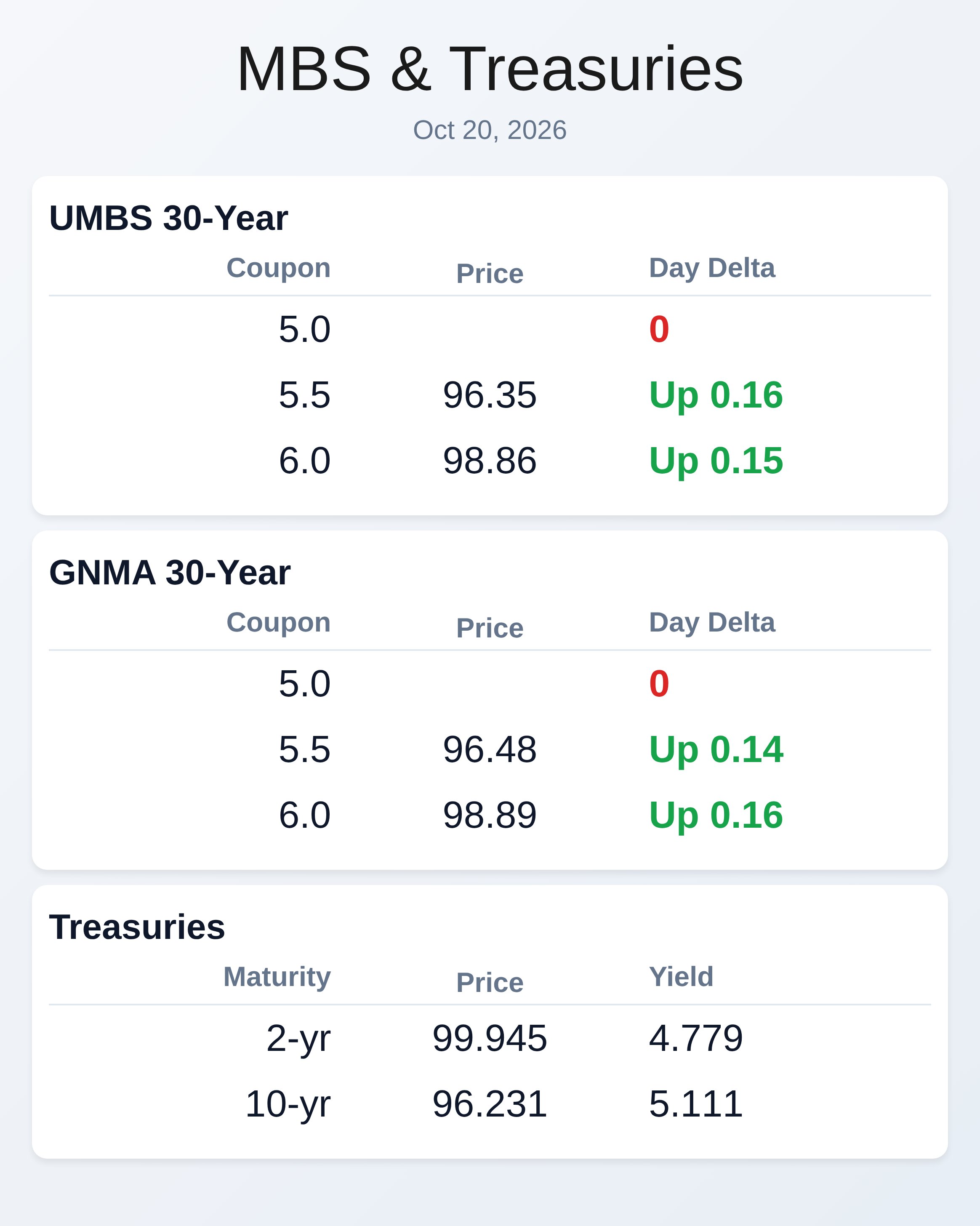
Inflation remained sticky at 3.7% year-over-year in September, hotter than expected and raising concerns that Fed relief may be further away than hoped. Core CPI accelerated beyond forecasts, pushing wholesale prices up 6.3% annually—the largest gain since 2022—while energy costs continue to bite borrowers and lenders alike. The inflation surprise sent mortgage rates initially higher before a sharp tech-stock selloff triggered a flight to safety, creating a paradoxical rally in bonds that left the 10-year Treasury at 5.11% by week’s end.
This volatile backdrop means mortgage rates could pivot quickly in either direction depending on whether AI-related credit concerns persist or economic resilience reasserts itself over the next two weeks before the next CPI print. Fannie Mae is expanding occupancy verification using borrower history, financial data, and property characteristics to flag potentially inaccurate designations starting November 13, requiring lenders to ensure primary-occupancy documentation is ironclad before submission. Freddie Mac reports substantially lower defect rates on loans using its automated validation tools, signaling that digital verification can cut rework and accelerate closings.
These moves reflect a broader industry push to reduce costly loan defects and reprurchase activity, which climbed 19.5% in Q2 2026 with Rocket, UWM, and Lakeview accounting for the largest share. Originators should view this as an opportunity to eliminate duplicate work and redundant verification steps—clean data and automated validation now save time and compliance headaches downstream. MBA Homebase, launched by the Mortgage Bankers Association and FirstHome IQ, offers loan officers NMLS-approved continuing education, monthly coaching, and access to the Trust Certified program regardless of lender affiliation.
The platform targets 5,000 participants by year-end with a long-term goal of 25,000, aiming to strengthen LO professional development and involvement in housing policy advocacy. Meanwhile, GSE repurchase activity accelerated as credit quality and documentation defects persist, reminding the industry that automation alone cannot substitute for disciplined underwriting and sound origination practices. The combination of stricter GSE verification, faster industry consolidation, and shrinking margins means surviving lenders will be those who invest in talent development and operational efficiency simultaneously.
Bonds staged a brief rally when tech-sector concerns flared mid-week, pushing the 10-year yield down 25 basis points from recent highs near 5.36%, only to give back most gains as equity markets stabilized. UMBS 6.0 coupons finished the week at 98.70, down 0.25 points from the previous close, while mortgage rates climbed back toward 7.5% as investors questioned whether the bond market’s safe-haven demand would persist. Without a clear recession signal or sustained AI-credit contagion, rates are likely to drift higher again, keeping borrowers on edge and lenders focused on tight hedging discipline.
Capital markets execution will prove critical in coming weeks: selective positioning, careful coupon management, and honest conversations about pipeline economics may be the difference between profitability and losses when margins compress further.
**Locking vs Floating**
Tech stock weakness has provided temporary support for bonds, but it remains unclear whether this safety rally can hold if equity markets stabilize. Borrowers closing within two weeks should consider locking given the narrow upside and persistent inflation concerns, while those with flexibility beyond mid-November might float if AI-credit worries escalate.
The risk/reward increasingly favors taking certainty at current levels rather than betting on a bigger rally that will require a recession or trade-war resolution to materialize.
**Today’s Events**
Building Permits: 1.400M vs 1.390M forecast (week of October 20)
Housing Starts: 1.221M vs 1.300M forecast (week of October 20)
**Bond Pricing**
**UMBS 30 yr**
| Coupon | Price | Intra-Day Change |
**GNMA 30 yr**
| Coupon | Price | Intra-Day Change |
**Treasuries**
| Term | Yield | Price | Intra-Day Yield Change |