**WTMS Blog Today = What’s up in Mortgage Today (PM) – 10/19/2026**
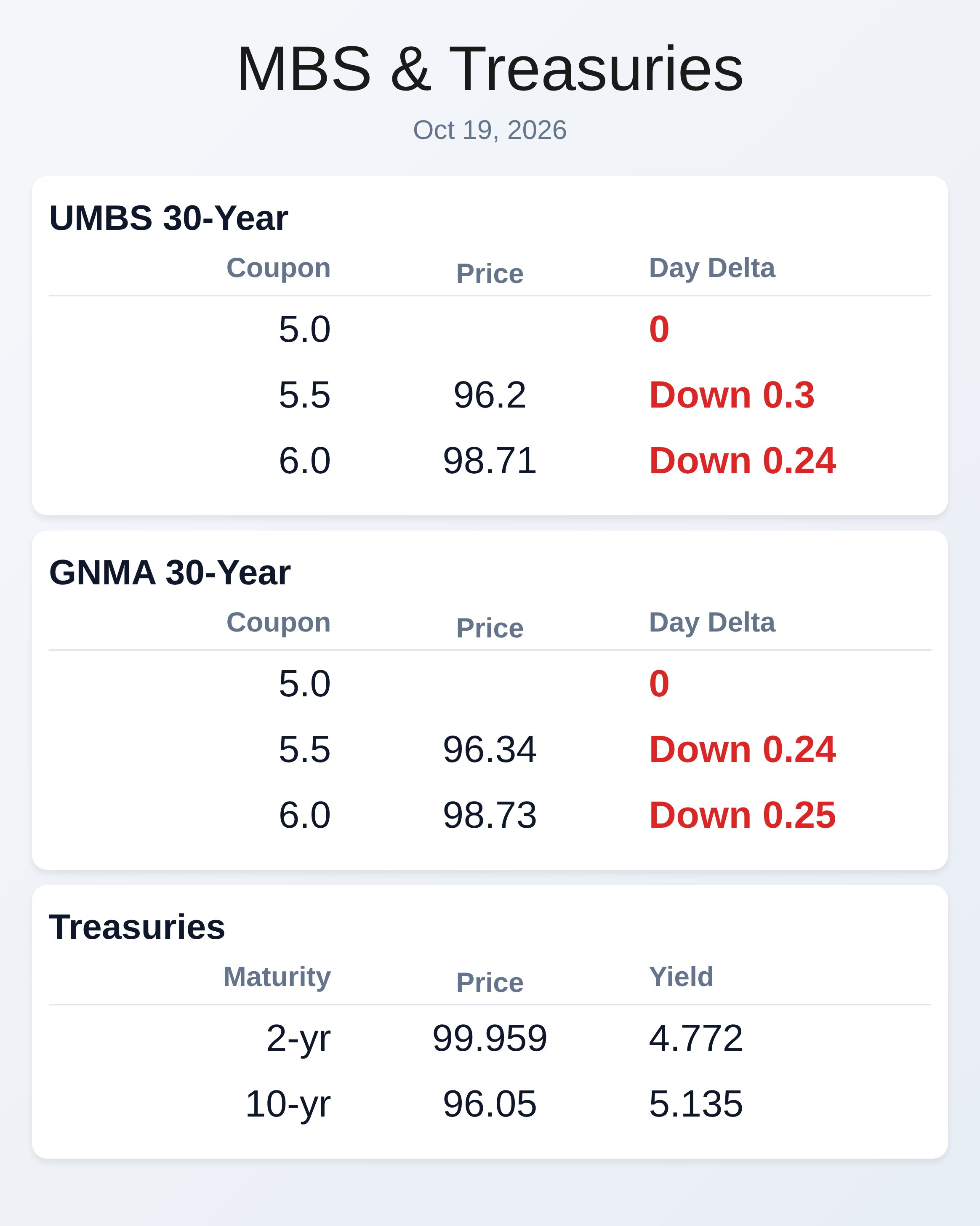
Bond markets staged a dramatic rally mid-week despite hotter-than-expected inflation data, as investors fled deteriorating technology stocks and AI debt concerns. The 10-year Treasury yield fell from a near-decade high of 5.36 percent to approximately 5.08 percent by Friday, with UMBS 6.0 gaining 70 basis points in a single day Thursday. However, Monday’s weakness signals that relief trade may be exhausting itself, as yields crept back toward 5.14 percent without clear economic catalysts behind the move.
Mortgage originators caught in the middle face thinning margins, reduced purchase activity, and persistent affordability headwinds that continue crushing qualified buyer pools. The MBA now projects 2027 mortgage origination volume declining 5 percent to below $2 trillion, forcing hard conversations about loan officer headcount, channel profitability, and cost structure sustainability. September’s existing home sales rose modestly but inventory climbed to a 4.8-month supply, marking the longest since the pandemic crash—a buyer’s market in name only when rates stay above 7 percent and most borrowers cannot qualify.
Meanwhile, home sellers outnumbered buyers by 63 percent last month, the widest gap since Redfin began tracking data in 2013, piling pressure on originators chasing fewer deals in a compressed window. Credit quality concerns are creeping higher as sub-700 FICO loans hit 11.4 percent of UMBS 30-year issuance year-to-date and VantageScore 4.0 shifts pricing paradigms away from tri-merge methodology. GSE repurchase activity surged 19.5 percent in Q2 2026, with Rocket, UWM, and Lakeview accounting for outsized share of putbacks despite scaling the market.
Servicer-level prepayment speeds reveal persistent differences, with Rocket/Quicken leading and Idaho HFA lagging for 14 consecutive months—critical data for mortgage investors evaluating portfolio risk beneath headline CPR figures. Technology adoption promises remain largely unproven as lenders splash millions on AI automation tools without baseline metrics, clear ROI calculation, or post-implementation discipline. The mortgage industry must resist deploying AI to automate dysfunction when the real opportunity lies in fundamentally redesigning inefficient workflows first.
Capital markets execution, hedging discipline, and selective positioning matter far more than chasing vendor promises when margins compress and volume evaporates—operational excellence beats technology evangelism in a downturn. Affordability continues its downward spiral with mortgage rates stabilizing near 7.5 percent while median home prices hold above $417,500 and consumer confidence weakens under dual weight of higher borrowing costs and persistent inflation. ARM adoption hit a 7-year high at 10.5 percent of applications as purchase activity dropped 16 percent year-over-year, forcing borrowers into riskier product categories.
Non-QM channels are growing as traditional conforming volume softens, creating both opportunity and concentration risk for lenders diversifying into less-regulated loan products. The MBA’s affordability roadmap pushes for lower credit fees, FHA insurance premium reductions, and agency pricing flexibility to restore purchasing power lost to rate elevation since February lows. Pending home sales sit near 12-year lows despite seller inventory rising sharply, reflecting the mismatch between available homes at high prices and buyers unable to qualify at current mortgage rates.
Originators must pivot toward client retention, home equity monetization through HELOC and second-lien products, and disciplined operational management—traditional purchase production will not carry the business through 2027.
**Locking vs Floating**
Mid-week’s tech-driven rally created a tactical opportunity for borrowers near closing, but Monday’s weakness suggests that relief is fragile and dependent on ongoing equity-market distress. The 10-year floor remains contested around 5.07 percent, with any stabilization in technology stocks likely to push yields higher toward resistance at 5.27 and 5.34 percent.
Lock decisions should weigh the 30-basis-point rally against historically high rate volatility and limited near-term catalysts for sustained bond strength.
**Today’s Events**
Data releases this week include existing home sales, jobless claims, wholesale prices, retail sales, import prices, and industrial production—all relevant to Fed rate expectations heading into year-end decision meetings.
**Bond Pricing**
**UMBS 30 yr**
| Coupon | Price | Intra-Day Change |
**GNMA 30 yr**
| Coupon | Price | Intra-Day Change |
**Treasuries**
| Term | Yield | Price | Intra-Day Yield Change |