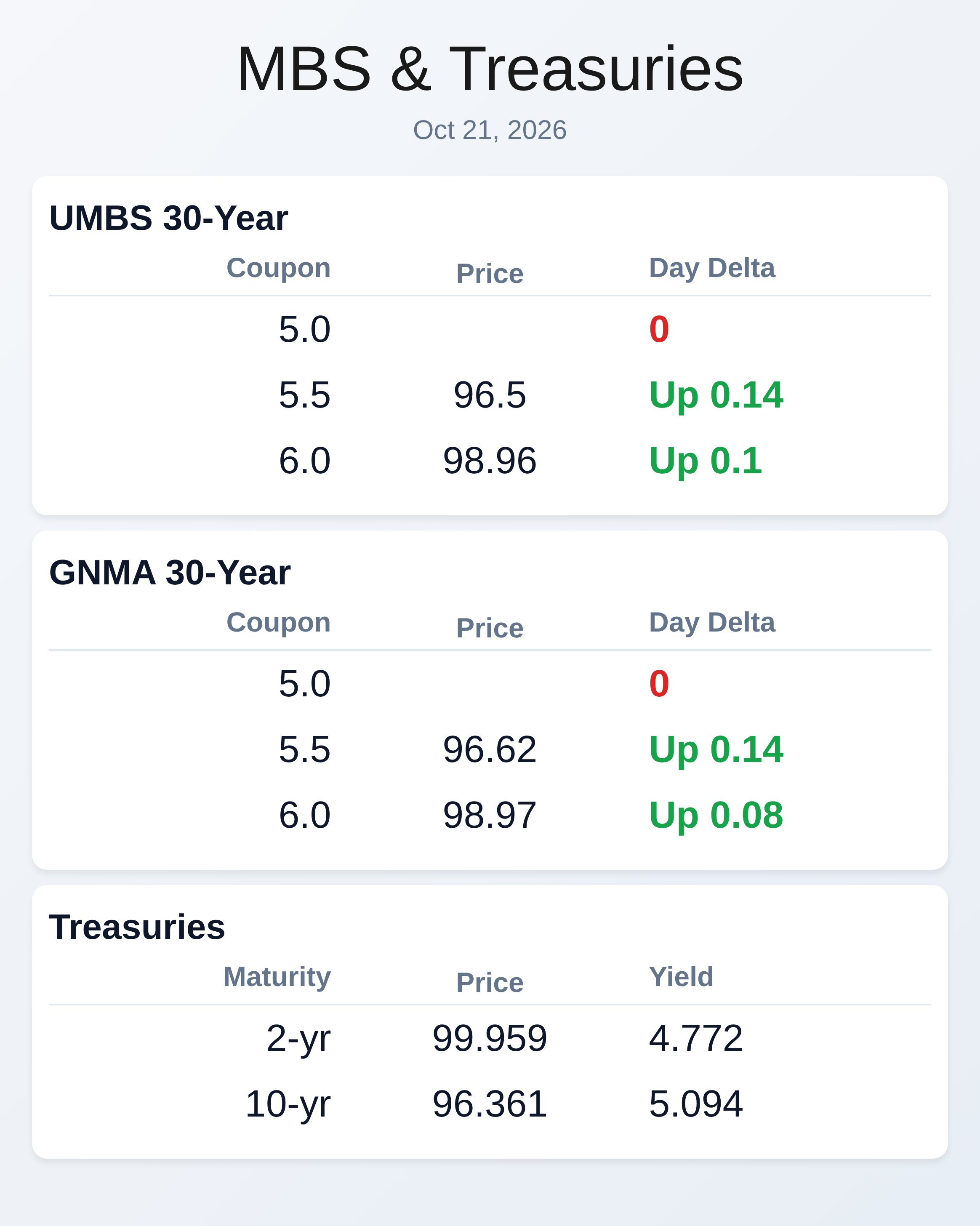
**WTMS Blog Today = What’s up in Mortgage Today (AM) – 10/22/2026**
Mortgage rates are stuck in a holding pattern as inflation concerns battle safe-haven flows, leaving lenders navigating thin margins and volatile execution pricing. The 30-year fixed rate eased to 7.41 percent last week, its first weekly decline in over two months, yet purchase applications still tumbled seven percent week-over-week and eighteen percent year-over-year. Housing starts fell 5.2 percent to 1.221 million units while pending home sales hit near twelve-year lows, revealing affordability constraints that even modest rate relief cannot penetrate.
Builder confidence sank to a fourteen-year low as elevated construction costs and labor pressures compound the damage from higher mortgage rates. Lenders are consolidating workforces and questioning LO sustainability as the MBA projects 2027 production to drop five percent below $2 trillion amid expectations rates will hover between 7.0 and 7.5 percent through year-end. GSE repurchase activity jumped 19.5 percent in Q2 2026 to $465.2 million in unpaid principal, with Fannie Mae driving the aggressive stance at 83.2 percent repurchase rates on resolved demands compared to Freddie’s 53.1 percent.
Loans originated six to twelve months prior are driving most buyback volume, signaling quality concerns surfacing in recently originated pools as underwriting standards face closer scrutiny. The combination of weak demand, margin compression, and rising repurchase risk is forcing originators to sharpen credit overlays and documentation practices. FHFA Director Bill Pulte signaled possible loan-level price adjustment changes and a potential shift from three-bureau credit reports to one or two reports by year-end, moves that could lower origination costs and expand borrower access.
The November 2 appraisal dataset mandate requires all new submissions to UCDP to use UAD 3.6 format, replacing guidelines unchanged since 2010 and imposing significant underwriting complexity for lenders and AMCs. These regulatory changes arrive amid industry efforts to reduce affordable housing barriers and lower closing costs, though execution uncertainty remains high across multiple fronts. Non-QM and DSCR volumes continue gaining share from conventional conforming loans as borrowers with alternative documentation and cash-flow scenarios seek financing outside traditional agency boxes.
Spring EQ, Pennymac, AmeriHome, and other non-Agency players are expanding product offerings and reducing minimum DSCR thresholds to capture opportunities missed by conforming lenders facing stricter overlays. The structural shift toward non-Agency lending reflects lenders’ attempts to offset declining purchase volumes and pressure from elevated rates destroying refinance pipelines. Technology is reshaping loan officer retention strategies as artificial intelligence automates repetitive tasks and frees LOs to focus on relationships and borrower engagement rather than manual coordination of exceptions and document reviews.
Platforms like Highlands Residential’s Basecamp and Total Expert’s 10x lender model are gaining traction among originators seeking to do more with smaller teams, shifting the conversation from cost reduction to productivity leverage. AI governance concerns persist, however, with banks blocking consumer-facing AI agents from accessing financial accounts, signaling regulatory caution around algorithmic decision-making in sensitive transaction environments. Pending home sales, existing home inventory, and builder confidence metrics paint a picture of a housing market caught between sticky inflation and demand destruction, with one in three Americans now blaming lenders for the affordability crisis.
Capital markets remain caught between an inflation-driven case for higher rates and growing concerns that consumers cannot withstand sustained financial pressure, leaving Treasury yields range-bound and mortgage spreads volatile. Lenders focused on cost discipline, credit quality, technology investment, and strategic partnerships are positioning for market share gains in an environment where production growth appears unlikely through 2027.
**Locking vs Floating**
Uncertainty over whether the Fed will hike or hold through year-end creates two-sided pipeline hedging risk.
If inflation readings accelerate further, mortgage spreads could widen materially, rewarding early locks and best-efforts execution. Conversely, a sustained Treasury rally driven by equity volatility or economic deterioration could shorten MBS duration and force costly hedge adjustments. Originators should validate premium pricing strategies and understand investor appetite for higher coupons rather than chasing incremental execution value and exposing pipelines to pool failure risk.
**Today’s Events**
October NAHB Housing Market Index released today; builder sentiment sank to 14-year low at 29. Weekly mortgage applications data showed purchase apps down 7% week-over-week and 18% year-over-year. September pending home sales fell 4% from August, marking biggest monthly drop in over three years.
September existing home sales rose 1.5% month-over-month but remain 2.2% below last year with median price at $417,500. Treasury 20-year bond auction scheduled; focus on investor demand amid geopolitical oil price pressures and equity market volatility related to AI infrastructure funding concerns.
**Bond Pricing**
**UMBS 30 yr**
| Coupon | Price | Intra-Day Change |
**GNMA 30 yr**
| Coupon | Price | Intra-Day Change |
**Treasuries**
| Term | Yield | Price | Intra-Day Yield Change |