When AI Meets Viruses: A Match Made in the Microscope
Stanford Researchers Use AI to Engineer New Viruses—What Could Possibly Go Wrong?
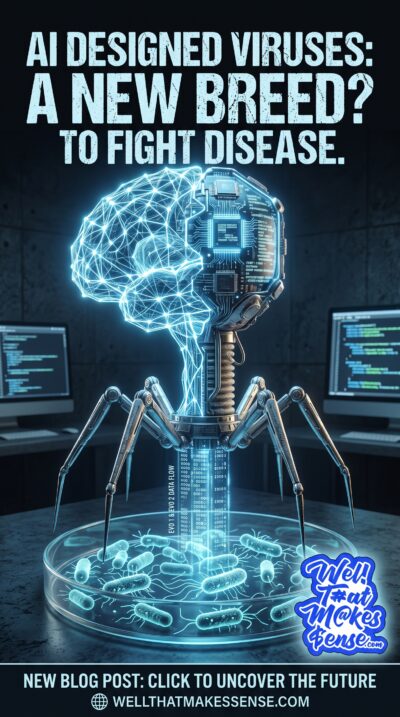
Picture this: a bunch of scientists at Stanford and the Arc Institute huddled around computers, furiously typing away while sipping coffee that’s probably stronger than the average cup of joe. What are they doing? Well, they’ve just pulled off a scientific feat that sounds like a plot twist in a sci-fi movie—they used artificial intelligence (AI) to design 16 entirely new viruses that don’t exist in nature! That’s right, folks; the future is here, and it’s potentially viral in more ways than one! These new creations, called bacteriophages, specifically target the pesky E. coli bacteria. So, if you thought AI only excelled in writing essays or creating cat memes, think again!
So how did these brainy researchers pull this off? They took two AI models, cleverly named Evo 1 and Evo 2, and trained them on millions of genomes, kind of like giving them a crash course in viral biology. Once equipped with this knowledge, they tasked the models with designing new versions of Phi X174, a well-studied virus that has a particular knack for infecting E. coli. After synthesizing 285 phages, a whopping 16 of them turned out to be viable, and some even replicated faster than the original! Talk about a glow-up!
But what makes these AI-designed viruses even cooler is that they’ve proven to be an effective weapon against E. coli that have developed resistance to natural phages. This breakthrough is a glimmer of hope for developing novel therapies to tackle those stubborn antibiotic-resistant infections that have plagued humanity for far too long. Think of it as a “viral cocktail” that makes the bad bacteria throw in the towel. No one likes a stubborn E. coli, am I right?
Now, before you start imagining a world where AI runs rampant, creating scary viruses with malicious intent, let’s calm those fears. The research team took safety seriously—none of the models were trained on viruses that infect humans, animals, or plants. So, no need to stock up on tinfoil hats just yet! However, the implications of this technology are massive, and as they say, with great power comes great responsibility. This raises questions about what could happen if AI were to be trained differently—like, say, on more dangerous pathogens. Yikes!
How This AI Marvel Can Help Humanity
Now, let’s focus on the silver lining. First off, these AI-designed viruses could pave the way for new therapies in the ongoing battle against antibiotic-resistant infections. As we face a growing crisis where traditional antibiotics are losing their effectiveness, having a new arsenal of bacteriophages could be a game-changer. It’s like having an ace card up your sleeve when the bacteria are calling all the shots.
Secondly, the ability to engineer viruses could lead to tailored treatments for specific bacterial infections. Instead of the one-size-fits-all approach of antibiotics, we could develop precise therapies targeted at individual bacterial strains. This not only boosts effectiveness but also minimizes the side effects that come with broad-spectrum antibiotics—hello, healthier patients!
Lastly, the use of open-source AI models like Evo 2 could democratize access to viral engineering. Imagine universities and smaller research institutions around the globe harnessing this technology to address local health crises. It could spark a new era of collaborative scientific efforts, bringing together minds from different backgrounds to tackle some of the toughest health challenges.
But What Could Go Horribly Wrong?
Now, let’s not ignore the elephant in the room. While this technology holds tons of promise, it could also be a double-edged sword. One potential risk is the possibility of bioweapons. If someone with ill intentions were to use this technology to engineer harmful pathogens, we could be looking at a potential public health nightmare. It’s like handing someone a magic wand and hoping they don’t decide to turn everyone into frogs!
Furthermore, as AI in biotechnology evolves, the need for stringent regulations and safety measures becomes more pressing. Without proper oversight, the pace of innovation could outstrip our ability to manage it safely. Just because we can do something doesn’t mean we should. A little caution and responsibility can go a long way in ensuring that we leverage these advancements for good, not for creating a real-life horror movie scenario.
In conclusion, while the idea of AI-designed viruses may sound like something out of a sci-fi thriller, it’s an exciting development in the fight against antibiotic resistance. Just remember, folks: with great power comes great responsibility! And while you’re contemplating the future of science, don’t forget to subscribe to WellThatMakesSense.com for more fun and informative content! Who knows? You might just pick up some tips on how to outsmart that stubborn E. coli!
So, if you enjoyed this wild ride through the intersection of AI and virology, don’t forget to subscribe so you can keep up with the latest and greatest (and maybe a few wacky) updates in the world of real estate and mortgages!