
When Your Rate Bet Goes Sideways: UWM’s $603 Million Oopsie and What It Means for Your Shop
Turns out betting the farm on rates dropping is risky. Who knew? (Everyone. Everyone knew.)
Picture this: You’re at the casino, you’ve got a mortgage company instead of chips, and you just bet it all on black. Except black is “rates going down,” the wheel lands on “Powell says nah,” and you just lost $603.2 million, your dividend, 38% of your equity, and had to call the distressed debt guys to come bail you out. Welcome to UWM’s Q1 2025, folks. It’s a masterclass in what happens when your interest rate derivatives strategy is less “sophisticated hedge” and more “YOLO into the Fed meeting.”
For those of us grinding it out in mortgage sales, watching one of the biggest players in the game take a bath this spectacular is both terrifying and educational. So let’s break down what happened, why it matters, and what you can learn from someone else’s extremely expensive mistake. Spoiler alert: hedging your pipeline and gambling on rate direction are not the same thing, no matter what your CFO tells the board.
The Boring (But Important) Numbers Nobody Wants to Talk About
Before we get to the fireworks, let’s set the stage with UWM’s regular old terrible quarter. Purchase volume hit $23.8 billion, down 13% in a market that actually grew. Read that again. The market went up, UWM went down. Total volume dropped from $44.9 billion in Q1 to $39.7 billion. Meanwhile, expenses climbed 21% because apparently someone forgot to tell the expense department that revenue was headed the wrong direction.
Here’s where it gets spicy: their secured line of credit. A year ago? $425 million drawn. Today? $2.95 BILLION. That’s not a typo. They’re originating less, spending more, and borrowing billions to cover the gap. If this were your neighbor’s financial situation, you’d be taking casseroles over and gently suggesting they talk to someone.
But wait, there’s more! Equity dropped from $1.75 billion a year ago to $985 million today. Their non-funding debt to equity ratio went from 1.90x to 3.18x to a absolutely stunning 6.13x. They’re sitting on $5.31 billion in MSRs on top of $985 million in book equity. This is what financial advisors call “concerning” and what the rest of us call “oh no.”
The $603 Million “Hedge” That Wasn’t
Now for the main event. UWM’s loss on interest rate derivatives over the past five quarters reads like a horror movie: gain $208.9M, gain $27.8M, gain $61.4M, lose $138.2M, lose $603.2M. That last one is the sound of a strategy exploding on the launch pad.
The company will tell you this was pipeline hedging. That’s corporate speak for “protecting our locked loans from rate movements.” Sounds responsible, right? Except there are three giant, flashing, neon-sign problems with that story.
Problem One: The Math Doesn’t Math. Their pipeline was $9.6 billion. A $603 million loss is 6.3% of that pipeline. For context, rates didn’t move anywhere close to 6% in a quarter. To lose $603 million hedging a $9.6 billion pipeline, your hedge position has to be a multiple of what you’re actually hedging. That’s not hedging, that’s leveraged speculation with a fancy name.
Problem Two: Hedges Are Supposed to Offset. When you hedge properly, you might lose money on the hedge, but you gain it back in loan production income. UWM’s loan production income came in at $527.2 million with gain margins actually improving from 123 basis points to 133 basis points. So margins went up AND they lost $603 million? Both of those things can’t be true if this was actually a hedge. It’s like saying you bought insurance on your car, the car is fine, but somehow you’re still out the cost of a new Mercedes.
Problem Three: They Closed the Position. Derivative liabilities dropped from $337.8 million last quarter to $33.6 million this quarter. They exited. This isn’t some paper mark-to-market loss that reverses next quarter when rates cooperate. This is real money, spent, gone, poof. Someone apparently bet big that Mat Ishbia’s public campaign to get Jerome Powell fired would work and rates would crater. Narrator voice: It did not work.
When You Have to Make “The Call”
So what do you do when you’ve just vaporized $603 million and your equity is circling the drain? You call Oaktree Capital. But here’s the thing—you don’t call just any part of Oaktree. The quote in the press release comes from their Global Opportunities Group. That’s the distressed desk. The vulture capital guys. The folks who show up when you’re in trouble.
And their lawyers? Kirkland & Ellis, literally the top restructuring law firm in America. Nobody calls these two organizations when things are going great. This is the financial equivalent of seeing an ambulance pull up to your competitor’s office. It’s not subtle.
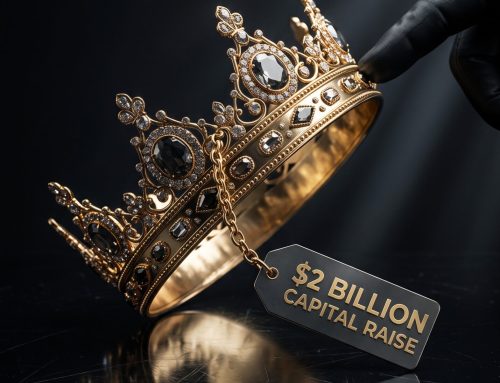
The deal itself is a thing of beauty if you’re Oaktree and a nightmare if you’re an existing UWM shareholder. For $2.05 billion, Oaktree gets: preferred stock that sits ahead of common shareholders, warrants that dilute existing owners, a $400 million rights offering at a $2.00 floor price that dilutes everyone again, a board seat plus the right to appoint a second director, and oh yeah, the dividend is dead. Gone. Killed.
This is what “strategic capital partnership” means in plain English: “We’re bailing you out, and you’re going to pay for it in equity, control, and future upside.” It’s not quite a takeover, but UWM’s independence just took a serious hit.
What This Means for You (Yes, You Reading This)
If you’re an LO or branch manager, you might be thinking, “Cool story, but I don’t trade derivatives or run a wholesale lender.” Fair. But there are some seriously important lessons here that apply to anyone in this business.
First: Don’t confuse hedging with gambling. UWM’s derivatives position was supposed to protect their pipeline. Instead, it became a leveraged bet on rate direction. In your world, this is like the difference between locking a rate to protect a borrower versus floating because you’re sure rates are going down next week. One is risk management. The other is speculation. Know the difference.
Second: When the market is growing and you’re shrinking, that’s a you problem. UWM lost market share in a growing market while spending more money. If your production is down in an up market, blaming the Fed isn’t going to cut it. Look at your process, your conversion rates, your follow-up. The market gave everyone an opportunity—why didn’t you take it?
Third: Leverage is a double-edged chainsaw. UWM went from borrowing $425 million to $2.95 billion in a year. In mortgage sales, this shows up as getting over-extended on marketing spend, hiring too fast, or expanding into new markets without the infrastructure to support it. Growth is great until the cash flow stops, and then it’s a crisis.
Fourth: Pride comes before the capital raise. There’s a reason Oaktree’s distressed desk and Kirkland & Ellis showed up. When you refuse to adjust your strategy because you’re convinced you’re right about rate direction, market conditions, or whatever, you end up making desperation moves. Stay flexible. The market doesn’t care about your conviction.
The Uncomfortable Truth
Here’s what really happened: UWM made a massive directional bet that rates would fall. Maybe they believed their own PR about influencing the Fed. Maybe they thought they had better information than the market. Maybe they just got caught up in their own momentum. Whatever the reason, they leveraged up that bet to a degree that a $603 million loss became existential.
And now? They’re still here, but they’re here with Oaktree owning a huge chunk of their future, their dividend dead, and their shareholders diluted into next week. They’ll survive—companies this size usually do—but they’ll survive on someone else’s terms.
For the rest of us, this is a reminder that in mortgage, you can be wrong about rates, wrong about volume, or wrong about expenses, but you can’t be wrong about all three at once. And you definitely can’t leverage up a bet on something you don’t control (like Fed policy) and expect it to end well.
The mortgage business rewards patience, consistency, and risk management. It punishes ego, overleveraging, and confusing a bull market with genius. UWM just paid $603 million for that lesson. Learn it cheaper.
Want more mortgage industry drama, analysis, and the occasional “what were they thinking?” breakdown delivered to your inbox? Subscribe to Well That Makes Sense at WellThatMakesSense.com. We promise to make the boring stuff interesting and the interesting stuff unforgettable. Plus, we’ve never lost $603 million on a derivatives bet, so we’ve got that going for us